
Sperm Morphology: Why It Matters in Male Fertility Testing

Written by Rayomand S Engineer
Reviewed by Dr. Thongram Biju Singh, MD


Key Takeaways

Introduction
Male fertility contributes to nearly half of all infertility cases and abnormalities in sperm morphology is a key factor. Assessing sperm structure, along with motility, count and overall semen quality, makes semen analysis an essential tool in fertility evaluation.
A clear understanding of these parameters helps guide appropriate medical consultation and supports informed decision-making for couples planning a family.
What Is Sperm Morphology?
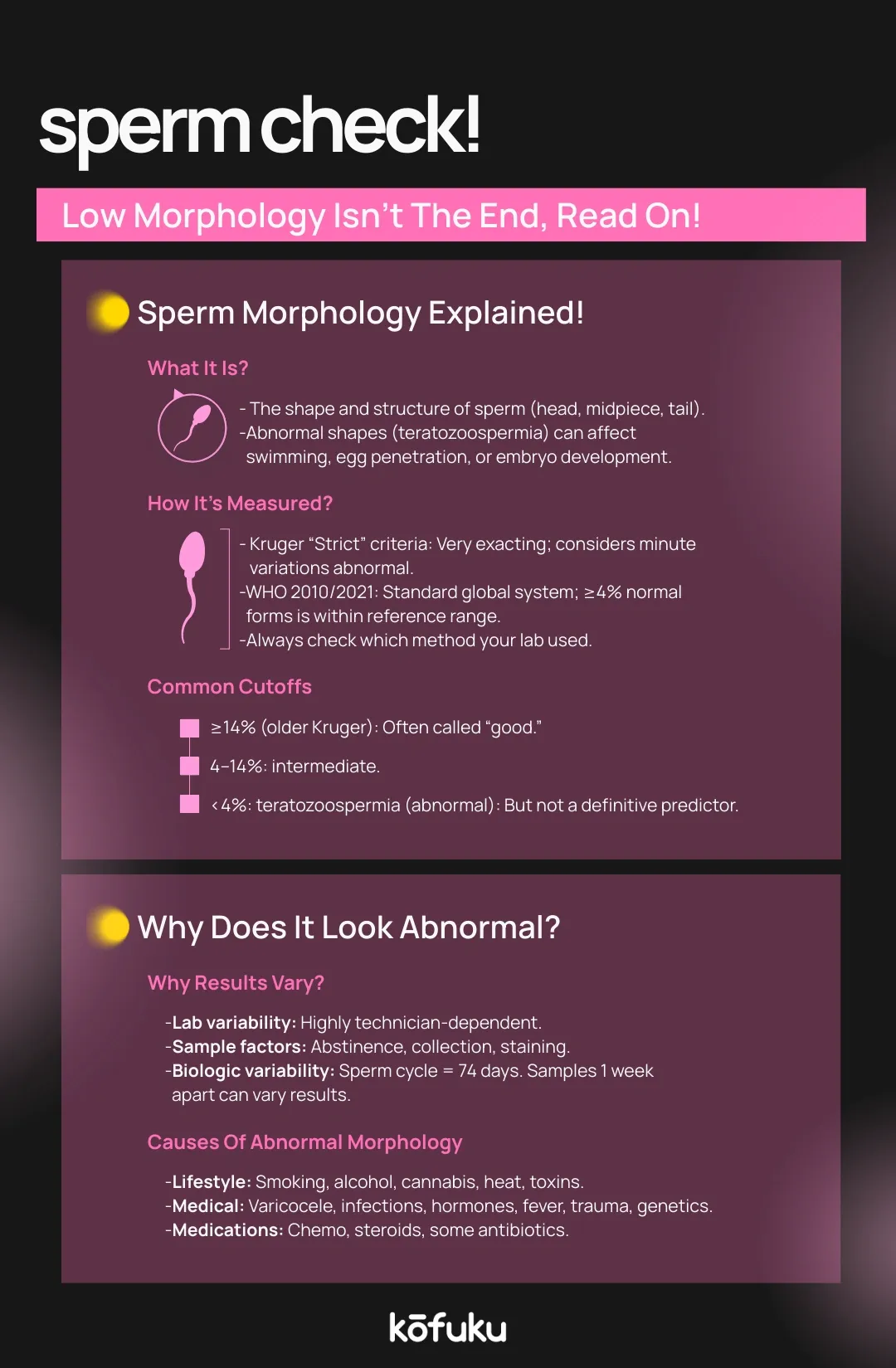
Sperm morphology refers to the sperm's size, shape, and layout. Oval-shaped healthy sperm, a midpiece rich in mitochondria, and a long tail that aids movement are its characteristics. Malformations of these characteristics can impair fertility.
In laboratory testing, sperm are assessed with the help of a microscope to identify abnormalities. In a microscope, spermatozoa are examined to mention defects in their head, midpiece, and tail, and this gives invaluable information about their reproductive health
Normal Sperm Morphology Range: What Experts Look For
The usual sperm morphology range is the percentage of normally formed sperm. Based on WHO recommendations, sperm with ideal morphology at 4-14 per cent is assumed to be normal. Values below this will raise the possibility of teratozoospermia, which can negatively impact fertilisation.

Sperm Motility and Morphology: The Key Fertility Parameters
Morphology alone does not determine fertility. Sperm motility, the ability of sperm to move efficiently, is equally critical. Motile sperm can navigate the female reproductive tract to reach and fertilise the egg.
Normal Motility of Sperm Explained
Normal motility of sperm refers to the proportion of the cells that move in a straight line. Normal semen has a progressive motility of 40-50 per cent of sperm, which is a key to the success of fertilisation.
Sperm Motility Range and Average Values
Sperm motility range normal can be anywhere within a range of 40-60 per cent for progressive motility. The average number of sperm motility is obtained with a series of semen samples and used to determine the clinical recommendation.
Immotile Sperm Meaning
Immotile sperm, meaning sperm that are unable to move, render the chances of fertilisation less likely. Proportions of immotile sperm in excess of normal may be a pointer to underlying medical disorders that are subject to specialist management.
Knowing terminology is important for understanding anything from and arranging fertility treatment.
Normozoospermia Means
Normozoospermia is when the total sperm count, motility, and morphology are within the normal limits. Such is a reflection of good semen parameters that hint at fewer chances for male factor fertility challenges.
Teratozoospermia Definition
Teratozoospermia is defined as the abnormal shape of sperm, whereby most of them have a lower percentage. This may have adverse effects on fertility, and treatment may involve improving the quality of the sperm or the utilisation of assisted reproductive methods.
How to Read a Sperm Analysis Report
Understanding what sperm analysis reports entail helps men know where they stand on fertility and what they can do to improve the situation. Reports are usually made of the number of sperm, motility, appearance, etc., accompanied by the semen.
How to Read a Sperm Count Report
How to know sperm concentration? It is the number of sperm seen to be present in a millilitre of semen. Normal is above 15 million sperm/ml. If the count is low, lifestyle changes or medical care may be necessary.
Sperm Under the Microscope
Sperms are checked with the help of a microscope to detect whether the sperm is morphologically normal, motile, and viable. Technicians assess various fields in order to get an accurate value of semen quality. This microscopic examination will give us information that would be important in fertility planning.

Factors That Affect Sperm Morphology and Motility
Several factors influence sperm quality:
- Lifestyle: Smoking, alcohol, and obesity can impair morphology and motility.
- Medical conditions: Varicocele, infections, and hormonal imbalances impact semen parameters.
- Environmental exposures: Heat, radiation, and toxins can damage sperm structure and movement.
Addressing these factors can improve outcomes in male fertility testing.
How to Improve Sperm Morphology Naturally
Improving sperm health includes lifestyle, diet and somtimes medical treatment.
Diet, Vitamins, and Supplements
- Zinc and selenium: Crucial for sperm development and motility.
- Antioxidants: Vitamins C and E reduce oxidative stress, protecting sperm.
- Omega-3 fatty acids: Improve membrane fluidity and tail function.
Medical Treatments When Needed
Specialists of fertility may prescribe hormone treatment or assisted reproductive treatments. Options to improve the morphology of sperm can address hormonal balance with medications, lifestyle counselling and even invasive options of IVF.
FAQ
Sperm morphology refers to the size and shape of sperm. Semen analysis checks if sperm have a normal structure, which is important for fertilisation and male fertility potential.
According to WHO guidelines, at least 4% of sperm should have normal morphology. Values below this indicate abnormal shapes, which can reduce fertility chances but do not eliminate conception possibilities.
For natural conception, at least 40% motile sperm are desirable, with 32% showing progressive motility. Lower values can affect fertility, but pregnancy may still be possible in some cases.
Normozoospermia means a man’s semen analysis shows normal sperm count, motility, and morphology. It indicates healthy semen parameters and generally good chances of achieving pregnancy under normal reproductive conditions.
Teratozoospermia means that most sperm have abnormal shapes. These abnormalities can affect the sperm’s ability to swim, penetrate an egg, and fertilise, potentially reducing fertility but not completely preventing pregnancy.
Sperm count shows the total number, while morphology reflects shape. Compare values with WHO standards: count ≥15 million/ml and morphology ≥4% normal forms suggest better fertility outcomes. Consult specialists for interpretation.
Immotile sperm cannot swim toward the egg, making natural conception difficult. Complete immotility suggests infertility, while partial immotility may still allow conception through assisted reproductive techniques like ICSI.
Yes, antioxidants, zinc, vitamin C, vitamin E, folate, and omega-3 fatty acids support healthy sperm shape. A balanced diet, reduced alcohol, and lifestyle changes can improve morphology over time.
Adopt a nutrient-rich diet, exercise regularly, quit smoking, reduce alcohol, manage stress, and avoid excessive heat. Supplements like zinc and antioxidants can also support healthier sperm shape and function.
Here's what people are reading

Your guide to allergy medications: tablets, creams, and remedies

Why smoking a cigarette before or after your workout can harm your gains

Why jackfruit is good for you: nutrition, benefits, and how to enjoy raw and cooked jackfruit

Why are there epithelial cells in my urine? meaning & causes

What to know about hiv wasting syndrome