
Soybeans 101: Nutrition Facts and Health Effects of Soya Bean Chunks

Written by Shubhechhya Mukherjee


Key Takeaways
- Introduction
- What Are Soybeans? Introduction to Soya Bean Nutrition and Its Significance
- Nutritional Value of Soya Beans: What Makes Them a Powerhouse of Nutrition
- Comprehensive Nutrition Chart of Soybean Chunks: Protein, Carbs, Fats, and More
- Soybean Protein Content Per 100g: How Protein-Rich Are Soya Chunks?
- Health Benefits of Soya Bean Chunks: Why Include Them in Your Diet
- Potential Side Effects of Soya Bean Chunks and How to Consume Them Safely
- How Much Protein is There in 50 g and 100 g of Soya Chunks?
- Comparison of Soya Bean Chunks Nutrition With Other Protein Sources
- Tips for Including Soya Chunks in Your Daily Meals
- Common Myths and Facts About Soya Beans and Soya Chunks
- FAQs

Introduction
Have you noticed how soya bean chunks have been absorbed into the Indian household as part of vegetarian food and gym food? From curries to stir-fries, these high-protein meat alternatives caught on with the general population due to it being a source of affordable plant-based protein and its ease in production.
However, soya bean nutrition value, health effects, and even its downsides are not entirely known by everyone. This blog delves into soya bean nutritional value, health benefits, potential side effects, and more
What Are Soybeans? Introduction to Soya Bean Nutrition and Its Significance
Soybean is a legume of East Asian origin but is now found all over the world. They are used as the core constituent of several products, including soy milk, tofu, soy flour, and textured vegetable protein (TVP), which are called soya bean chunks in India.
The soya bean nutritional value, which is substantial, is what makes it a popular option for many. Most plant proteins lack the complete amino acid profile that soy and animal proteins have, making it an important source of plant proteins for vegetarians and vegans.
Nutritional Value of Soya Beans: What Makes Them a Powerhouse of Nutrition
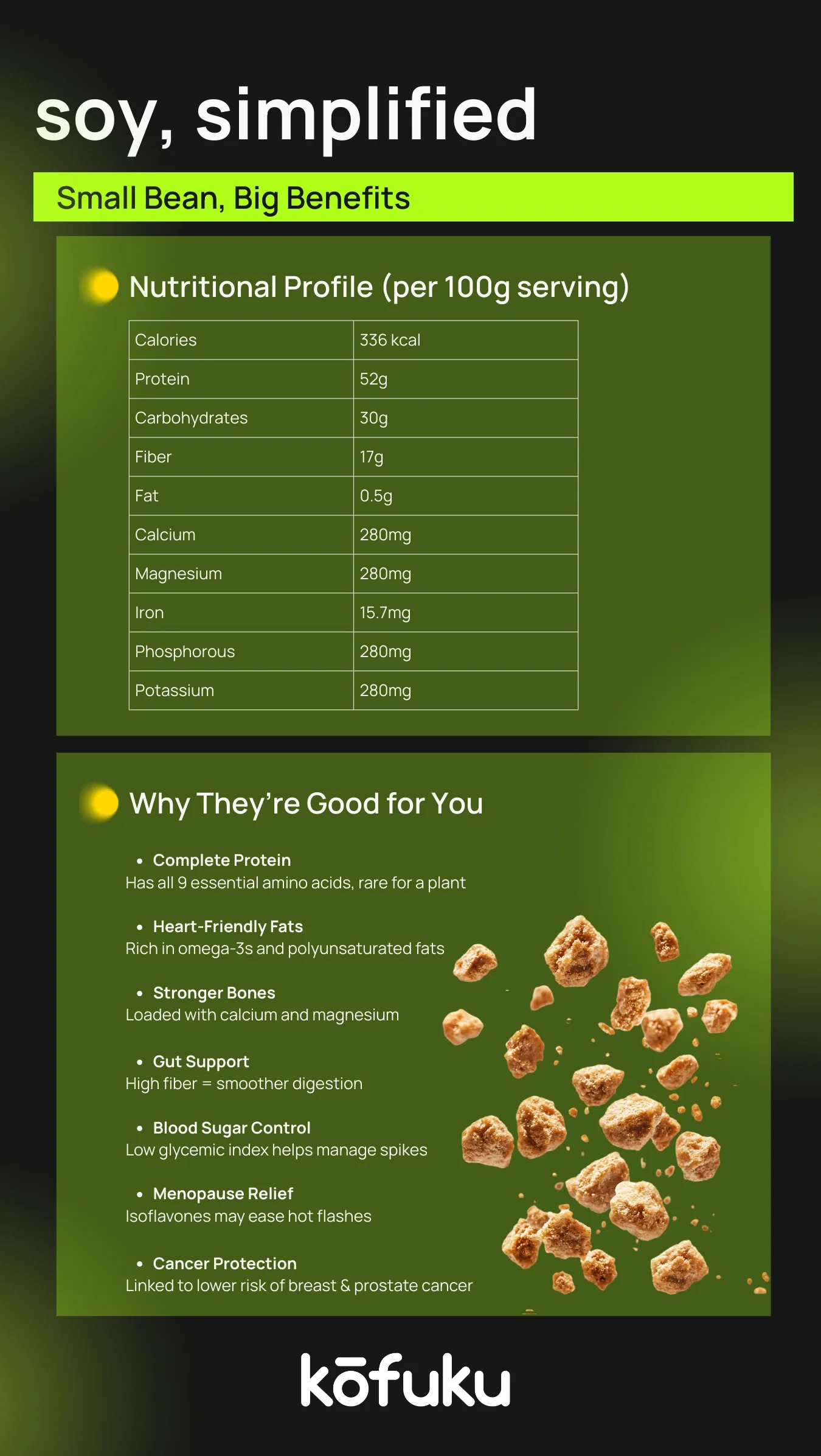
Soya bean is rich in nutritional value. Whole soybeans are a good source of protein, fibre, fat, vitamins, and minerals. They contain high levels of isoflavones, compounds with antioxidants and hormone-modulating activity.
Here is what makes soy a nutritional powerhouse:
- High protein density: Perfect for muscle repair and overall health.
- Good fat content: Contains polyunsaturated (healthy) fats, including omega-3s.
- Micronutrients: Provide iron, calcium, potassium, and magnesium.
- Fibre: Supports digestion and weight management.
Comprehensive Nutrition Chart of Soybean Chunks: Protein, Carbs, Fats, and More
hen soy flour is cooked into textured protein, it forms soybean chunks. They are dry and need to be soaked first before being cooked. After being rehydrated, they are akin to meat in texture and are strong in versatility.
A typical soya chunks nutrition chart per 100 grams (raw, uncooked) looks like this:
- Calories: 345 kcal
- Protein: 52 g
- Carbohydrates: 33 g
- Fat: 0.5 g
- Fibre: 13 g
- Calcium: 350 mg
- Iron: 20 mg
The health benefits provided by the soya chunks are primarily based on protein, vitamins, and minerals, whereas fat is minimal. That is why they are usually prescribed to individuals on high-protein and weight-loss diets.

Soybean Protein Content Per 100g: How Protein-Rich Are Soya Chunks?
The most frequently asked question is about the content of soybean protein per 100g compared to other protein-rich sources. Here’s a quick comparison:
- Soya: ~52 g per 100 g
- Eggs: ~13 g per 100 g
- Chicken: ~31 g per 100 g
- Lentils: ~9 g per 100 g
This makes soybeans a reliable and affordable protein source for those who avoid meat.
Health Benefits of Soya Bean Chunks: Why Include Them in Your Diet
Despite the high percentage of protein, the benefits of soya bean chunks are far more than that. Regular consumption can have a favorable effect on various medical parameters, including muscle mass and cardiac health.
Advantages of Consuming Soya Chunks for Muscle and Heart Health
The benefits of soya chunks are primarily evident for fitness enthusiasts and sports persons. They assist in muscle repair and growth and contain high-quality plant protein. Additionally, it contains isoflavones that help maintain cholesterol levels, thereby reducing the risk of cardiovascular disease. Including soya chunks as part of your diet can help in long-term cardiac wellness.
How Soya Chunks Help in Weight Management and Digestive Health
Soy is high in protein and fibre, which stimulates satiety and minimizes overall calorie consumption. This makes them practical in weight control. Additionally, fibre helps with bowel movements and promotes a healthy digestive system. These are the immediate advantages of soya chunks, which can be incorporated into regular diets.
Potential Side Effects of Soya Bean Chunks and How to Consume Them Safely
Although soy is generally safe to consume, excessive intake of soybean chunks may cause some side effects. Isoflavones, which are phytoestrogens, have the potential to replicate hormone functions, thereby raising concerns for those with thyroid disorders or those who are sensitive to hormones.
Some reported soya chunks side effects include:
- Bloating or digestive discomfort may occur if eaten in large amounts.
- Possible interference with thyroid medication.
- Allergic reactions.
How Much Protein is There in 50 g and 100 g of Soya Chunks?
People usually ask about the amount of protein in various quantities of soya chunks. Here is how much protein you get with 100 and 50 g of soya chunks:
- Soya chunks protein per 50 g: About 26 g
- Protein in 100 g of soya chunks: Around 52 g

Comparison of Soya Bean Chunks Nutrition With Other Protein Sources
When compared with lentils, chickpeas, or paneer, the soybean chunks' nutritional profile clearly stands out. While most legumes provide under 10 g of protein per 100 g, soy delivers over five times more.
Soy is also a good source when compared with animal sources, even when they are fermented. Chicken breast protein is ~27 / 100 g, lower than the soybean protein per 100 g.
Tips for Including Soya Chunks in Your Daily Meals
Appearing in different cuisines, Soya chunks are flexible and absorb flavours, which makes them easier to incorporate. Some useful suggestions are:
- Add them to pulao, biryani, or fried rice.
- Mix in curries or gravies.
- Use in cutlets, patties, or kebabs.
- Toss into salads after boiling.
Regular additions of soy will help you get the advantage of soya chunks without getting bored.
Common Myths and Facts About Soya Beans and Soya Chunks
Despite their popularity, misconceptions surround soy. Let’s clear some:
-
Myth: Soy causes hormonal imbalance. Fact: Normal intake is safe; only excessive quantities may cause issues in sensitive individuals.
-
Myth: Soy protein is inferior to animal protein. Fact: Soy is a complete protein, unlike most plant sources.
-
Myth: All soy is genetically modified. Fact: Non-GMO soy products are widely available.
Dispelling myths ensures people can enjoy the real soya bean chunks' benefits without unnecessary fear.
FAQ
The soya bean nutrition value is high, and it is rich in protein, fibre, essential fatty acids, vitamins, and minerals. This makes them a powerhouse food, supporting muscle growth, heart health, and overall wellness.
On average, protein in 100 gm soya chunks contains about 52 g of protein, making them one of the richest plant-based protein sources available.
The benefits of soya bean chunks include improved heart health, muscle repair, weight management, and better digestion. They also provide sustained energy, making them a valuable source of protein in balanced diets.
Soy chunks side effects are generally due to excess consumption. Some of these are bloating, digestive discomfort, or hormonal imbalance in sensitive individuals. Consuming them in moderation ensures maximum benefits without adverse effects.
Rich in protein and fibre, soya chunks' benefits include reducing hunger pangs, enhancing satiety, and promoting fat loss. They support calorie control, making them ideal for weight management and fitness goals.
The protein content of soya chunks per 50g serving is approximately 25–26 grams. This makes them an excellent mid-morning source of protein for building strength, maintaining energy, and supporting an active lifestyle.
Compared to eggs, milk, or pulses, nutri soyabean provides a higher concentration of plant-based protein. Its soybean protein content per 100g surpasses most vegetarian protein sources, making it a superior option.
The advantages of soya chunks include high protein intake, heart-friendly nutrients, improved digestion, and plant-based energy. They serve as a versatile food option for vegetarians, athletes, and health-conscious individuals seeking a balanced diet.
You can add soy chunks to curries, stir-fries, pulao, salads, or soups. Their versatility enables them to blend seamlessly with everyday meals, while boosting protein content and overall dietary quality.
Join our wellness community
Have a question or an experience to share? Join the Fitness discussion on Kofuku Social.
Medical Disclaimer
This article is for information only and is not medical advice. Kofuku content is community-driven and complements, not replaces, professional care. Consult a qualified provider before acting on any health decision.
Related articles

Soleus Pushups: An Effective Exercise to Manage Blood Sugar Levels

12 Healthy Protein Shakes for Weight Gain: Effective Protein Mass Gainers for Women