
Sexually Transmitted Diseases: Overview and Importance

Written by Rayomand S Engineer
Reviewed by Dr. Thongram Biju Singh, MD


Key Takeaways

Introduction
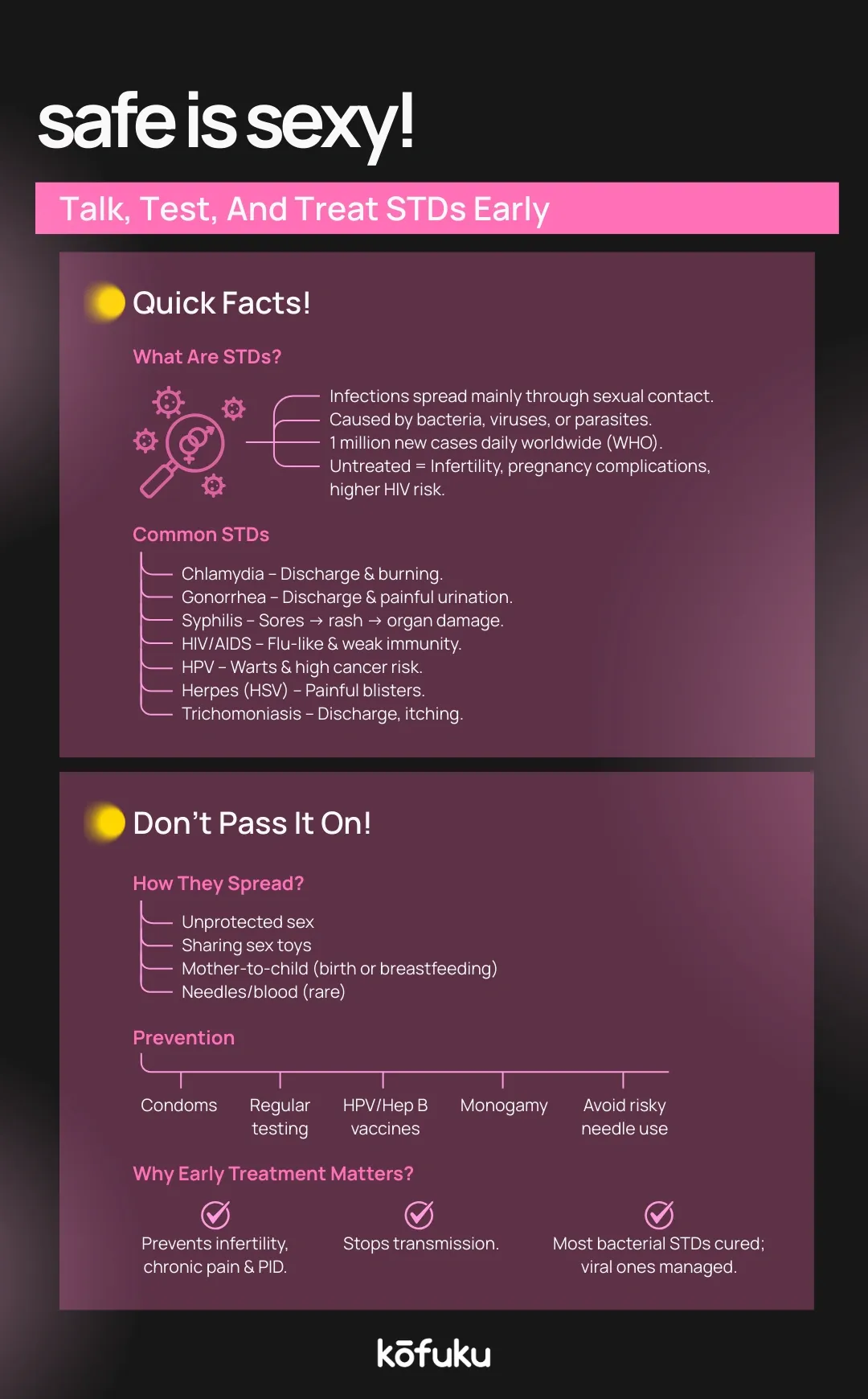
Growing up in India, many of us remember health classes where conversations about sexual health were brushed aside with embarrassment. However, the truth is that sexually transmitted diseases (STDs) are an urgent medical problem in the global context.
People usually do not seek medical advice early because of the stigma associated with it. This silence can make minor infections dangerous, leading to complications that could have been avoided with proper awareness, timely diagnosis, and treatment.
This blogs give a detailed account of sexually transmitted diseases, symptoms, how they are spread, vaccination, cures like pills, and when one ought to consult a doctor.
Common Sexually Transmitted Diseases Symptoms in Women
It is necessary to detect the symptoms of sexually transmitted diseases in women at the earliest so that the treatment can be made more effective. Women are not as symptomatic as men, and hence, regular screening becomes vital.
Typical symptoms include:
- Abnormal vaginal discharge (unusual colour, smell, or texture)
- Burning sensation during urination
- Itching or irritation around the genitals
- Pain during intercourse
- Irregular bleeding between periods or after sex
- Sores, blisters, or rashes on the genital areas
- Lower abdominal or pelvic pain

How STDs Can Be Transmitted: Oral and Kissing Risks Explained
Many think STDs are only passed through penetrative sex, but you can contract an infection from oral sex or, less often, kissing. Knowing these risks helps reduce the transmission.
-
Sexually transmitted diseases through oral sex: Oral sex can pass on herpes, gonorrhoea, chlamydia, syphilis, and HPV. The mouth and throat tissues are vulnerable to bacterial and viral infections.
-
Sexually transmitted diseases by kissing: While rare, deep kissing may transmit herpes simplex virus (HSV-1), especially if one partner has open sores. Saliva is generally less risky, but cuts or sores increase vulnerability.
Vaccines for Preventing Sexually Transmitted Diseases
Certain STDs can be battled with the help of vaccinations. These include:
- HPV vaccine: Guards against high-risk HPV strains responsible for cervical, anal, and throat cancers.
- Hepatitis B vaccine: Against hepatitis B, a sexually transmitted and bloodborne virus. It is widely used and very effective.
Skin Infections Related to Sexually Transmitted Diseases
Some STDs appear as skin infections. Detecting these changes can lead to early testing and treatment. Frequent sexually transmitted diseases and skin infections are:
-
Genital herpes: Painful blisters and sores around the genital or oral areas.
-
Syphilis: Starts as painless sores, later leading to rashes on hands, feet, or trunk.
-
HPV (genital warts): Small growths or bumps on the skin around the genital areas.
-
Molluscum contagiosum: Small, dome-shaped bumps spread by skin contact.
Treatment Options: Tablets and Medications for STDs
The majority of the STDs can be treated using sexually transmitted disease tablets. These sexually transmitted disease tablets are the most popular method of treatment, and it is convenient and efficient.
- Bacterial STDs (chlamydia, gonorrhoea, syphilis): Treated with antibiotics such as azithromycin, doxycycline, or penicillin.
- Parasitic STDs (trichomoniasis): Metronidazole tablets are often prescribed.
- Viral STDs (herpes, HIV): Managed with antiviral tablets like acyclovir, valacyclovir, or antiretroviral therapy (ART) for HIV.

Importance of Early Detection and Testing for STDs
Successful treatment is more likely if an STD is detected early. The majority of infections remain latent for months or years, silently destroying the body. Regular testing is essential for sexually active individuals, as it can help with early detection.
Testing methods include:
- Blood tests for HIV, syphilis, and hepatitis
- Urine tests for gonorrhoea and chlamydia
- Swabs from the genital, throat, or rectal areas
Prevention Tips to Avoid Sexually Transmitted Diseases
Key prevention tips:
- Use condoms and dental dams consistently
- Get vaccinated for HPV and hepatitis B
- Maintain regular health check-ups and screenings
- Avoid sexual activity during active outbreaks
- Openly communicate with partners about health and history
When to See a Doctor: Warning Signs and Symptoms in Women
Warning signs that need medical attention:
- Persistent or foul-smelling discharge
- Painful urination or intercourse
- Bleeding outside of menstrual cycles
- Visible sores, warts, or rashes
- Swelling or lumps in the genital areas
- Unexplained pelvic or lower abdominal pain
FAQ
Early symptoms include unusual vaginal discharge, burning urination, itching, pelvic pain, sores, or irregular bleeding. Many women experience mild or no symptoms, making regular testing very important.
Yes. Oral sex can transmit infections like herpes, gonorrhoea, chlamydia, syphilis, and HPV. Using protection such as dental dams and condoms can help reduce the risk.
Yes, though rare. Deep kissing can spread herpes simplex virus (HSV-1), especially if open sores are present. Transmission risk is lower compared with oral or genital sexual contact.
The HPV vaccine prevents infection from high-risk HPV strains, which can also lead to cervical and other cancers. The hepatitis B vaccine protects against liver disease. Both are safe, effective, and recommended before or soon after sexual activity begins.
Common STD-related skin infections include genital herpes, syphilis sores, HPV warts, and molluscum contagiosum. Visible rashes or blisters often signal underlying infections requiring medical diagnosis and timely treatment.
Tablets effectively cure bacterial infections like chlamydia, gonorrhoea, and syphilis when taken correctly. Antivirals manage viral infections like herpes and HIV, but do not eliminate them; they only suppress symptoms.
Yes. Many STDs, including chlamydia, HPV, and HIV, can remain asymptomatic for months or years. Regular screening is essential to detect silent infections and prevent long-term health complications.
If you suspect an STD, seek immediate medical advice and get the necessary testing done. Early diagnosis can help enahnce the effectiveness of the treatment and reduce complications.
Join our wellness community
Have a question or an experience to share? Join the Hush Talks discussion on Kofuku Social.
Medical Disclaimer
This article is for information only and is not medical advice. Kofuku content is community-driven and complements, not replaces, professional care. Consult a qualified provider before acting on any health decision.