Fibroadenoma Breast Treatment: Why Understanding This Common Lump Matters

Written by Shruti Thapa
Reviewed by Dr. Thongram Biju Singh, MD


Key Takeaways

Introduction
Have you ever felt a lump in your breast and instantly panicked? In India, where the awareness about breast health is still rudimentary, the reaction of many women who happen to find a lump in their breast is to panic. The fact is that the majority of breast lumps are harmless (benign), and one of the most prevalent is fibroadenoma.
Knowing more about this condition, its symptoms and signs, and the ways of treatment may alleviate unwarranted sense of fear and ensure that proper medical help is sought. This blog discusses the treatment of fibroadenoma of the breast, its forms, diagnosis, and treatment either by surgery, drugs, or just observation.
What Is a Fibroadenoma?
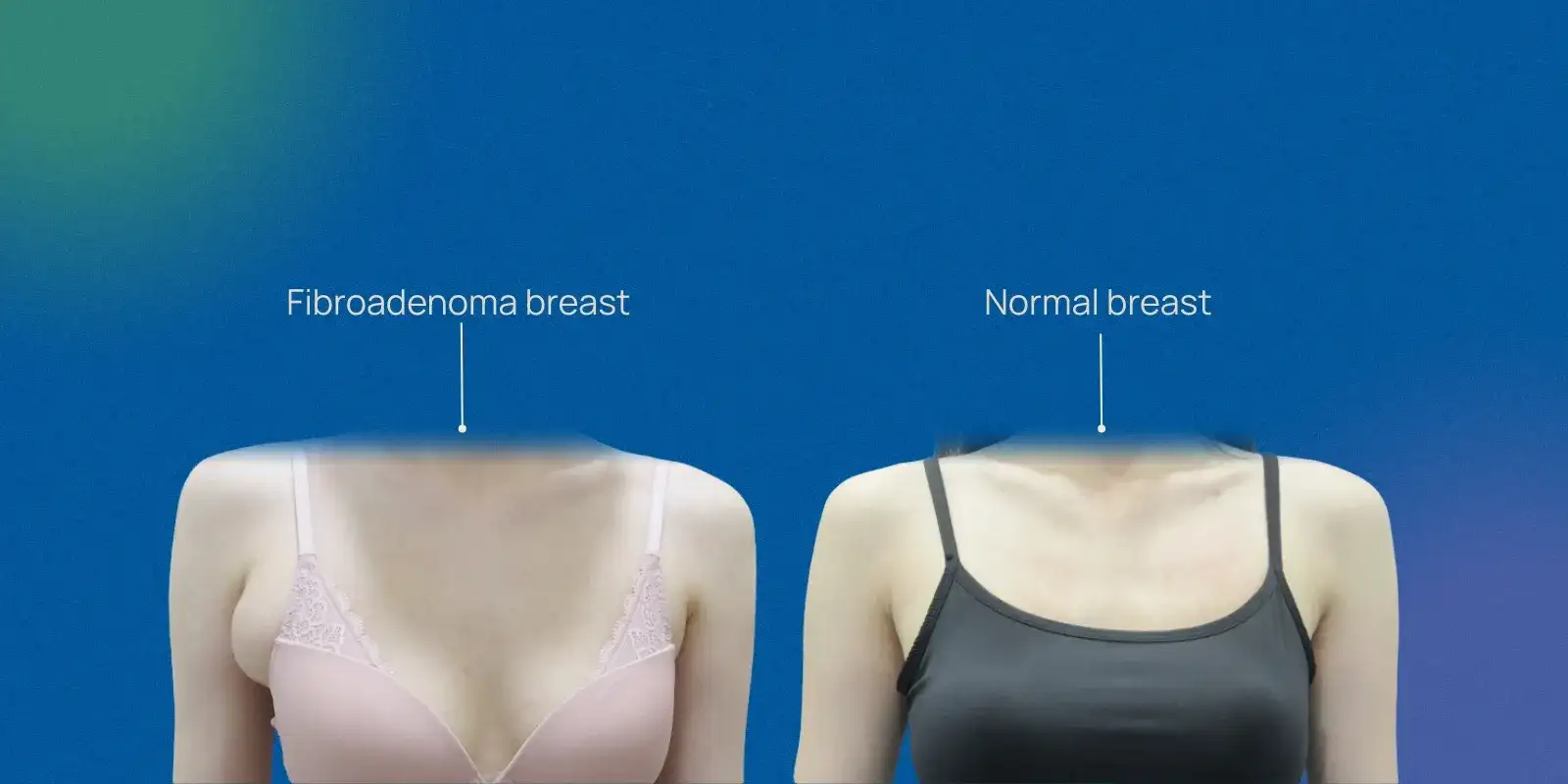
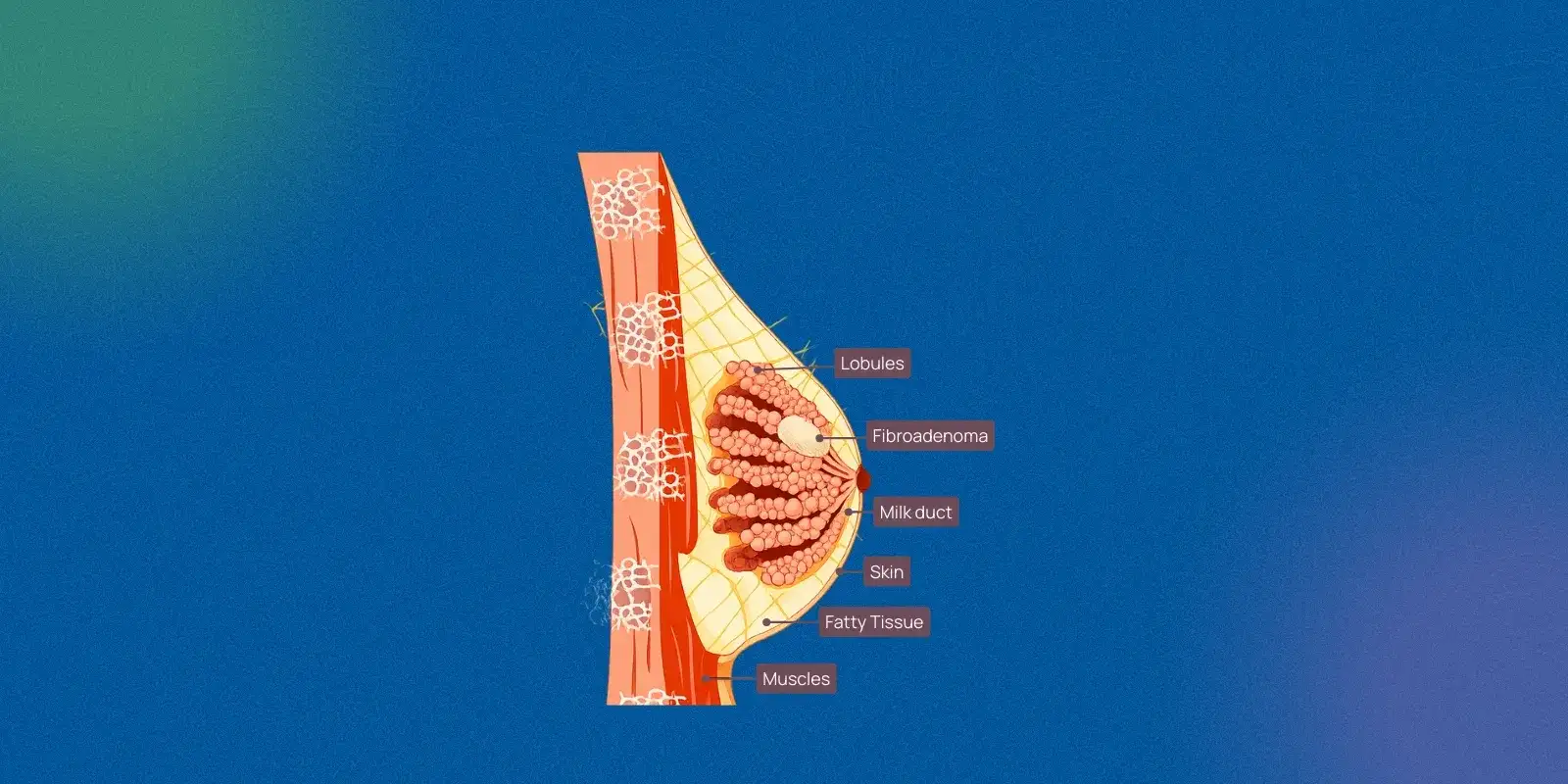
A fibroadenoma is a harmless breast tumour consisting of both gland and fibrous breast tissue. It does not spread to other parts of the body as opposed to the malignant tumours. Usually, they are smooth, firm, and mobile, like a rubbery mass, which is clearly felt when women perform self-examination, particularly in their teenage years and twenties.
Typically, doctors refer to fibroadenomas as breast mice because they move freely when they are touched. Though they are non-cancerous in nature, their presence demands medical attention to eliminate other complications.
Symptoms and How Fibroadenomas Feel in the Breast
Fibroadenomas usually appear as:
- A firm, smooth, rubbery lump inside the breast.
- Easily movable under the skin (not fixed to deeper tissues).
- Painless, although some women experience discomfort during their menstrual cycles.
- Most often found in the upper outer quadrant of the breast. Occasionally, fibroadenoma may grow, especially during pregnancy or when using hormone therapy, as it is sensitive to oestrogen.
Types of Fibroadenomas You Should Know
Fibroadenomas are not all similar. This can help determine the type, making treatment easier.
Simple vs. Complex Fibroadenoma
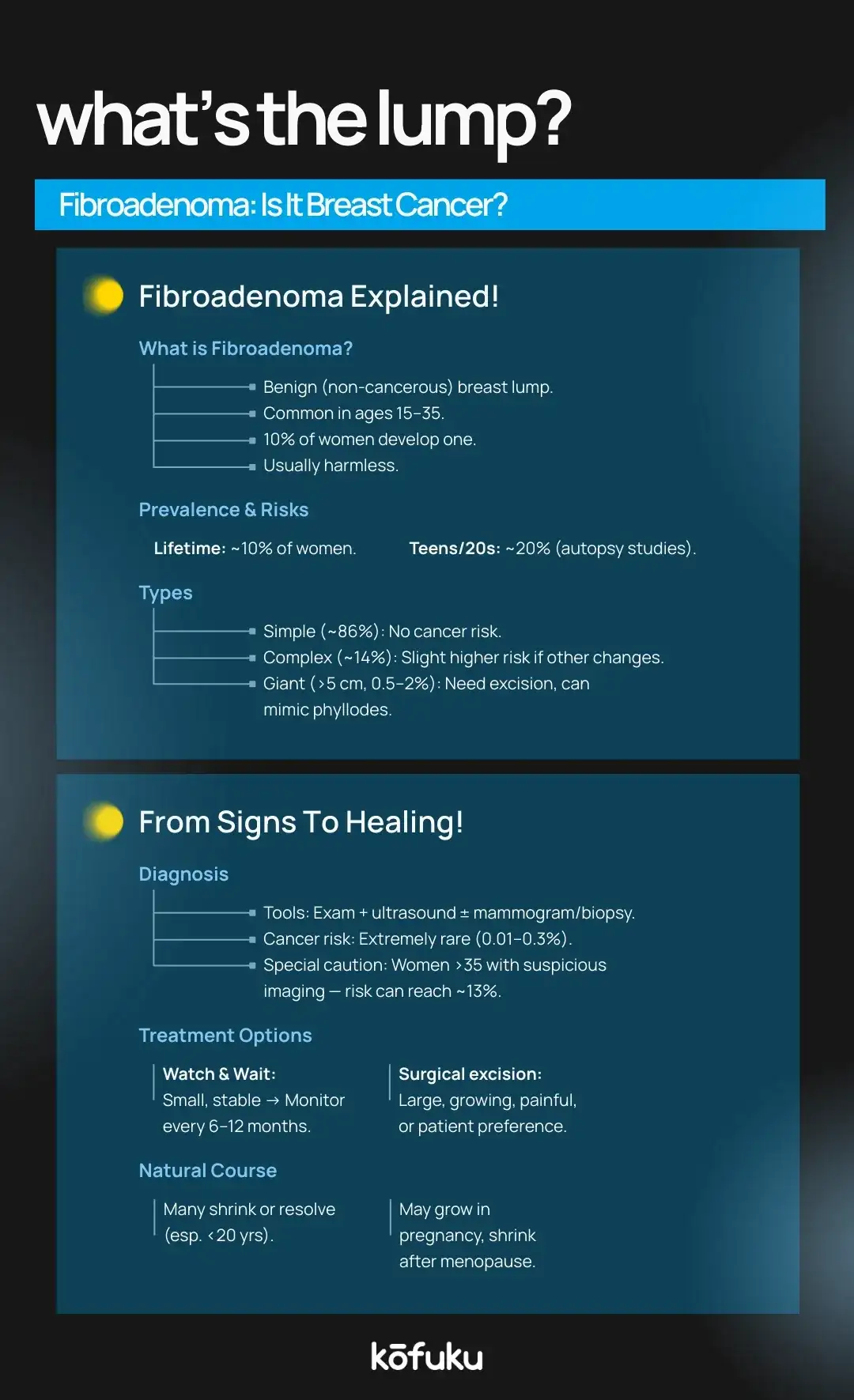
- Simple fibroadenomas are uniform and small, usually requiring no treatment beyond observation.
- Complex fibroadenomas may contain cysts or calcium deposits and sometimes require closer monitoring.
Giant Fibroadenoma
Giant fibroadenomas are large, as the name indicates, usually bigger than 5 cm. They are characteristic of adolescents and can lead to a visible change in the form of the breast that may need surgical removal of a fibroadenoma.
Intracanalicular Fibroadenoma
In this type, fibrous tissue squeezes the ducts, resulting in abnormal shapes. Its histology is required to establish the fact that the tumours are intracanalicular fibroadenomas and should not be confused with other breast lesions.
Fibroadenoma Breast Histology and Diagnosis
Confirming the condition with fibroadenoma breast histology is essential for doctors.
Microscopically, fibroadenomas have a mixture of stromal (fibrous) and epithelial (glandular) elements. Histopathology of fibroadenoma differentiates it from malignant tumours. Pathologists usually categorise them as pericanalicular or intracanalicular according to whether the ducts are compressed.
Imaging and BI-RADS Classification
Ultrasound and mammogram are useful in the diagnosis of fibroadenomas. Radiologists may characterise them using the BI-RADS (Breast Imaging Reporting and Data System) Fibroadenoma BI-RADS 3, or BI-RADS 3 fibroadenoma indicates a “probably benign” finding. These cases generally require follow-up imaging rather than immediate biopsy.
Role of Biopsy in Confirmation
Although clues are available with imaging, confirmation through a core needle biopsy of tissue under a microscope is required. It helps confirm if the cells are cancerous, and if they are, at which stage. This enables the doctor to form an effective treatment plan.
Treatment Options for Fibroadenomas
Treatment options are determined by the type, size, and symptoms, as well as the patient's preference.
Observation and Monitoring
Fibroadenomas that are small, painless, and exhibit no growth can be just kept under observation. Physicians can prescribe subsequent ultrasounds after a period of 6 to 12 months.
Fibroadenoma Treatment Tablets
Though there are no tablets that eliminate fibroadenomas, some fibroadenoma healing medications (including hormonal regulators) can help alleviate the pain and make the lump stable. Symptomatic medicines such as pain relievers are also prescribed.
Fibroadenoma Operation
When fibroadenomas are large, painful, or cosmetically concerning, doctors may recommend surgical excision.
- Three centimetre fibroadenoma removal is often suggested because lumps of this size can distort breast shape.
- The procedure is usually safe, with minimal scarring.
Fibroadenoma Treatment Without Surgery
Some minimally invasive alternatives exist, such as:
- Cryoablation (freezing the lump).
- Radiofrequency ablation.
The fibroadenoma is destroyed without conventional surgical use by these techniques, although it is not widely available in India. When it comes to fibroadenoma, it is best to follow the doctor’s guidelines and ensure regular checkups to prevent complications.
FAQ
The best fibroadenoma breast treatment depends on size, symptoms, and patient preference. Options include observation of the lump, fibroadenoma treatment tablets, minimally invasive procedures, or surgical removal for large or painful lumps.
No, not all fibroadenomas require surgery. Small, painless, and stable lumps can be safely monitored. Surgery is recommended only when fibroadenomas are large, growing, painful, or cosmetically concerning.
Yes, some fibroadenomas can be managed without surgery. Options include observation, hormone-related medications, or minimally invasive treatments like cryoablation, depending on lump size and the doctor’s recommendation.
Fibroadenoma treatment tablets may include hormonal regulators or pain-relief medications. While they don’t eliminate fibroadenomas, they help manage discomfort, breast tenderness, and stabilise hormonal fluctuations contributing to lump growth.
A fibroadenoma should be removed if it grows larger than 3 cm, causes pain, distorts breast shape, or raises concern during imaging or biopsy for malignancy risk.
Fibroadenoma operation is generally not painful due to local or general anaesthesia. Patients may experience mild soreness or swelling afterwards, which usually resolves with proper post-surgical care and pain management.
During a 3 cm fibroadenoma removal, the surgeon excises the lump through a small incision. The procedure is safe, quick, and usually leaves minimal scarring after healing.
Fibroadenoma breast histology shows a benign tumour composed of fibrous and glandular tissue. It is classified as pericanalicular or intracanalicular, helping pathologists distinguish it from malignant breast tumours.
Fibroadenomas are benign, mobile, painless lumps made of fibrous and glandular tissue. Breast cancers are malignant, often hard, irregular, fixed lumps that can spread, requiring urgent medical intervention and treatment.
BI-RADS 3 fibroadenoma indicates a “probably benign” finding on imaging. It means the risk of malignancy is very low, but regular follow-up imaging is recommended to monitor changes.
Join our wellness community
Have a question or an experience to share? Join the She Reads discussion on Kofuku Social.
Medical Disclaimer
This article is for information only and is not medical advice. Kofuku content is community-driven and complements, not replaces, professional care. Consult a qualified provider before acting on any health decision.