
Everything You Need to Know About Menstrual Cups: Comfort, Cost, and Safety

Written by Arpan Ghosh
Reviewed by Dr. Thongram Biju Singh, MD


Key Takeaways
- Introduction
- What is a Menstrual Cup and How Does it Work?
- Key Benefits of Menstrual Cups Over Pads and Tampons
- Understanding the Different Sizes of Menstrual Cups
- How to Use a Menstrual Cup for Periods: Step-by-Step Guide
- Side Effects and Risks of Using Menstrual Cups
- Cost of Menstrual Cups: What to Expect and Where to Buy
- FAQs

Introduction
Pads and tampons are still widely used in India, despite their disposable nature and the environmental harm they cause.
However, there are now comparatively sustainable alternatives available, and more women are opting for eco-friendly and convenient options, such as a menstrual cup, also known as a feminine cup for periods, to manage menstruation easily and safely.
Menstrual cups offer a reusable and ecologically sustainable option. Still, it is crucial to know how to use them, the correct size to use, whether they are safe, and their associated costs, among other aspects, before switching to them.
What is a Menstrual Cup and How Does it Work?
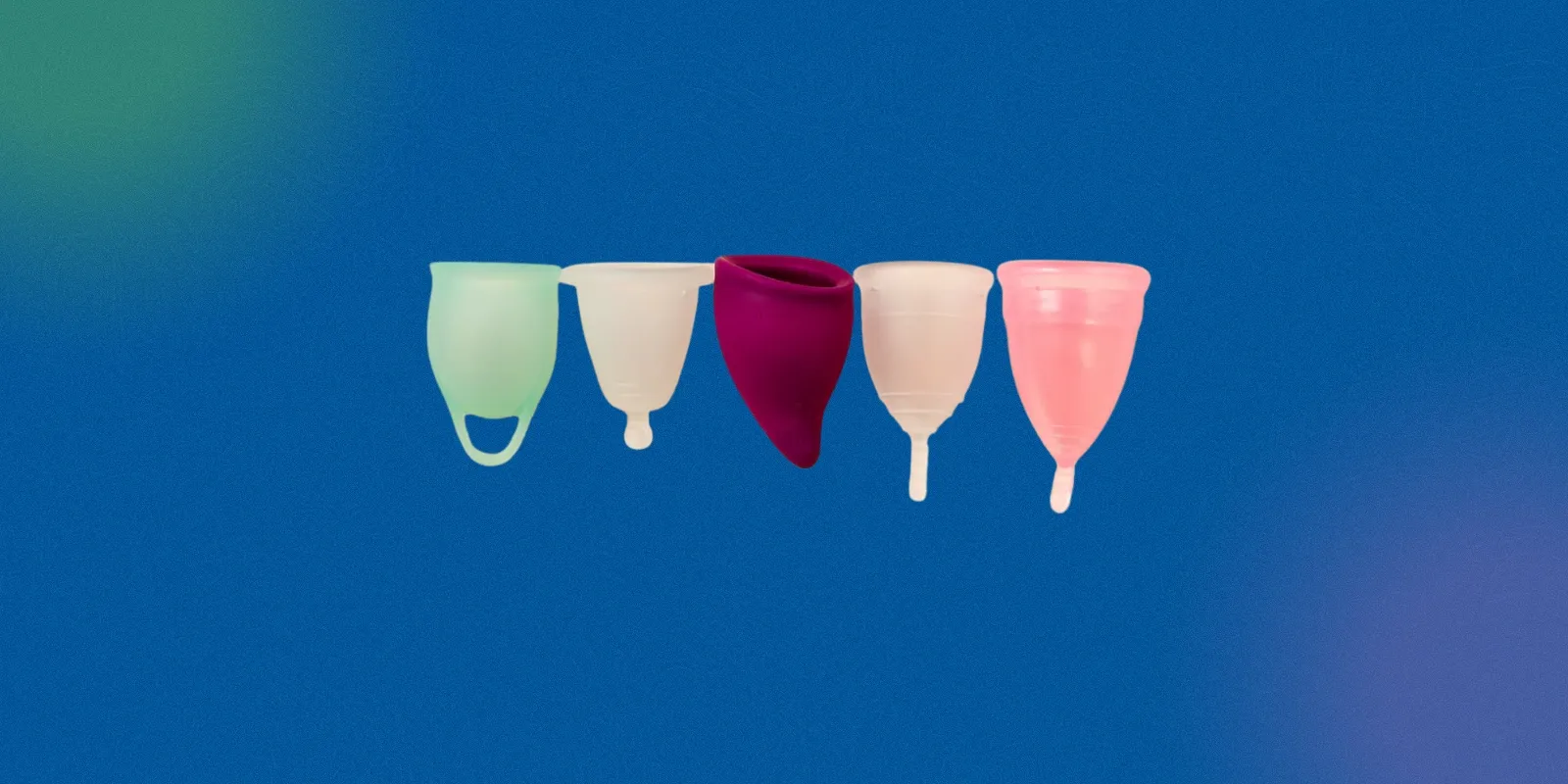
A feminine cup for periods is a medical-grade, flexible, and soft silicone cup that is a sphere in shape, made of rubber or latex. These cups collect menstrual blood instead of absorbing it as pads or tampons do.
They form a plug that is not permeable, allowing women to use them for up to 8-12 hours of continuous flow. Famous brands, such as the Diva Cup, or generics, both have a long life when used and maintained properly.
It is essential to note that when the cup is placed correctly, generally low or at the mid-vagina, it does not interfere with everyday activities, including exercise and sleep.
It takes some practice to use a menstrual cup at first, but those who have already mastered the skill find it very comfortable to use compared to traditional menstrual hygiene products.
Key Benefits of Menstrual Cups Over Pads and Tampons
Women opting for a feminine cup for periods enjoy several advantages:
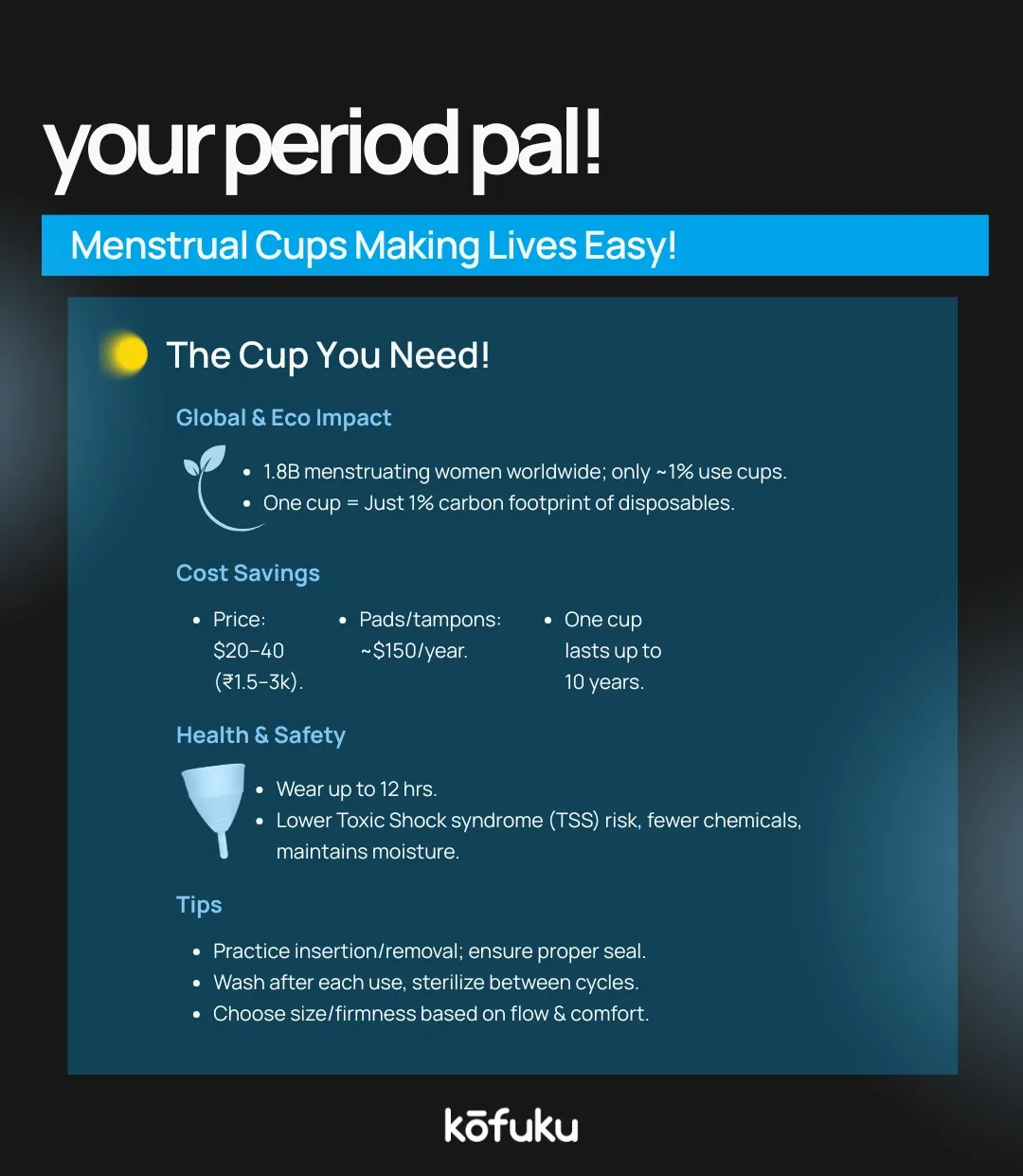
- Cost-Effective: The average lifespan is 5-10 years, so the menstrual cup cost is significantly less compared to pads or tampons.
- Environment-Friendly: Menstrual cups are reusable, reducing landfill waste.
- Extended Wear Time: Unlike tampons, which require frequent changes, a feminine cup for the period can be worn for 8–12 hours, making it convenient for work, travel, or school.
- Comfort: Many women report little to no discomfort once the cup is correctly positioned.
- Reduced Odour: Since menstrual blood is not exposed to air until removal, menstruation cup side effects like odour are minimised.

Understanding the Different Sizes of Menstrual Cups
Choosing the correct size of a feminine cup for periods is vital as it affects your comfort and its efficiency. They are generally available in small, medium, or large sizes, and the right one depends upon the physiology, flow, and whether you’ve given a vaginal birth.
Nonetheless, here’s an overview of which size of feminine cup for periods is suitable when:
- Small: Usually recommended for teens, women under 30, or those with a light flow.
- Medium: Suitable for women who have never given birth but have an average flow.
- Large: Ideal for women who have given birth vaginally or have a heavier flow.
How Cervix Height Impacts Which Menstrual Cup to Choose
Your cervix position is essential in choosing the right size of your cup. Your cervix naturally sits lower during your period, which is the best time to measure its position relative to the vaginal opening. Here’s how the height of cervix and menstrual cup size corelate:
- A low or short cervix requires a shorter cup for proper fit and to prevent discomfort.
- A high or tall cervix requires a longer cup, to prevent leakage and more capacity.
Many brands provide specific recommendations based on cervix height. Make sure you refer to that as well to find a cup that fits correctly and comfortably.
How to Use a Menstrual Cup for Periods: Step-by-Step Guide
Knowing how to use period cups is critical to prevent leakage and pain, especially for first-time users. Here’s a concise guide:
- Wash Your Hands: Always clean your hands before handling a menstrual cup.
- Fold the Cup: Common folds include the C-fold, punch-down fold, or 7-fold.
- Insertion: Gently insert the folded cup for menstruation into the vagina. Once released, it will open and create a seal around the cervix.
- Check Positioning: Ensure the cervix and menstrual cup are aligned comfortably. You should not feel the cup if inserted correctly.
- Removal: Wash your hands, pinch the base of the cup to release the seal, and gently pull it out.
- Empty and Clean: Empty the contents into the toilet, rinse with water or a mild, unscented soap, and reinsert.
It may take a few cycles for you to get used to using a feminine cup for periods without leaks. Sterilizing the cup before and after the period lengthens its life and keeps it sanitary.
Side Effects and Risks of Using Menstrual Cups
Menstruation cup side effects are rare but can occur if not used properly:
- Discomfort or Pain: Usually due to incorrect size or improper folding.
- Leaks: A sign that the cup is not fully opened or the wrong size is used.
- Infections: Poor cleaning may increase the risk of urinary tract infections.
- Reactions: Women sensitive or allergic to silicone or latex may experience irritation or an allergic reaction.
The majority of women experience fewer problems, especially after gaining sufficient practice in using a menstrual cup. Regular stops and hygiene ensure safe and comfortable use.
Cost of Menstrual Cups: What to Expect and Where to Buy
The price of a menstrual cup depends on the brand, material, and country in which you are buying it. In India, a menstrual cup cost ranges between ₹500 and ₹2500. There are also very popular choices of products, such as the Diva Cup for menstruation, but they may be slightly higher priced due to the brand name and its long-lasting life.
Although purchasing a high-quality feminine cup for periods can be a costly investment, the overall cost is cheaper in the long run when compared to tampons or pads. These cups are widely available in online and offline pharmaceutical stores.
FAQ
A menstrual cup is a flexible, reusable cup that collects menstrual blood. Unlike pads or tampons, it does not absorb fluid; instead, it forms a seal in the vagina, allowing for longer wear and reducing waste and cost.
Wash your hands, fold the cup for menstruation, insert it gently, and ensure it opens fully around the cervix. Practice patience, empty after 8–12 hours, rinse, and reinsert. Beginners may need a few cycles to master proper insertion and comfort.
Menstruation cup side effects may include leaks, minor discomfort, or irritation if the cup is not inserted properly. You can avoid or minimise these by choosing the right size, cleaning the cup thoroughly, sterilising before use, and learning correct insertion techniques for optimal comfort.
Check the cervix height during menstruation to select the size of the menstrual cup. A low cervix requires shorter cups, while a high cervix can use taller cups. Brands also provide sizing guidance. A correct fit prevents leaks and discomfort while ensuring the cervix and menstrual cup align safely.
When properly inserted, a menstrual cup for periods should be comfortable and usually unnoticeable. Discomfort may occur if the size is incorrect or the item is folded incorrectly. Adjusting the cervix and menstrual cup position ensures safe, pain-free use.
No, a properly placed menstrual cup cannot get lost. The cup sits around the cervix, and muscles prevent it from moving higher. Slight suction may make removal initially tricky, but relaxation and proper technique efficiently resolve the issue.
Empty the sanitary cup every 8–12 hours, depending on flow. Wash with mild, unscented soap and water. Sterilise before and after menstruation. Regular cleaning prevents menstrual cup side effects, such as infections, and ensures safe, hygienic reuse.
The menstrual cup cost in India ranges from ₹500 to ₹2,500, depending on the brand, material, and durability. High-quality, branded feminine cups for periods, such as the Diva Cup, offer long-term savings compared to disposable pads or tampons.
Join our wellness community
Have a question or an experience to share? Join the She Reads discussion on Kofuku Social.
Medical Disclaimer
This article is for information only and is not medical advice. Kofuku content is community-driven and complements, not replaces, professional care. Consult a qualified provider before acting on any health decision.