
Understanding Your MPV Test Results: What Your Blood Report MPV Means

Written by Shubhechhya Mukherjee
Reviewed by Dr. Ananthakrishnan Chandrasekhar, MD


Key Takeaways
- Introduction
- What is MPV in Blood Tests and Why Is It Measured?
- Normal Range for MPV and What It Indicates in Your Blood Lab MPV
- What Does Elevated MPV (High Platelet Volume) Mean?
- Causes and Health Conditions Associated with Low MPV Values
- How MPV is Used to Diagnose and Monitor Health Conditions
- Factors That Can Affect MPV Levels in Your Blood Report MPV
- When to Consult Your Doctor About Your MPV Lab Test Results
- Conclusion
- FAQs

Introduction
If you’ve gotten a blood test done, chances are that you have seen many abbreviations in it, including MPV. While getting blood tests is a simple procedure, understanding them is not. Terms like MPV, often found in a blood lab MPV panel, are rarely explained in detail.
Our body has tiny powerhouses in our blood that play a crucial role in keeping us healthy. Fascinating right? Mean platelet volume unveils the mysteries of your platelets’ size and can determine their impact on your health. Imagine these platelets as superheroes patrolling your bloodstream, and the MPV blood test as the code revealing their secrets.
Understanding what MPV is and why it matters helps you make informed decisions about your health. In this blog, we will explore what MPV in a blood report means, the blood lab MPV panel, the impact of elevated MPV, why you should get a lab test for MPV, and much more.
What is MPV in Blood Tests and Why Is It Measured?
Platelets are the mesh-like cells that play a crucial part in blood clotting and maintaining vascular integrity. Measuring MPV in blood tests can also help determine the size of your platelets. Generally, the MPV blood test is commonly included in the complete blood count (CBC) test and aids in identifying various health concerns.
Normal Range for MPV and What It Indicates in Your Blood Lab MPV
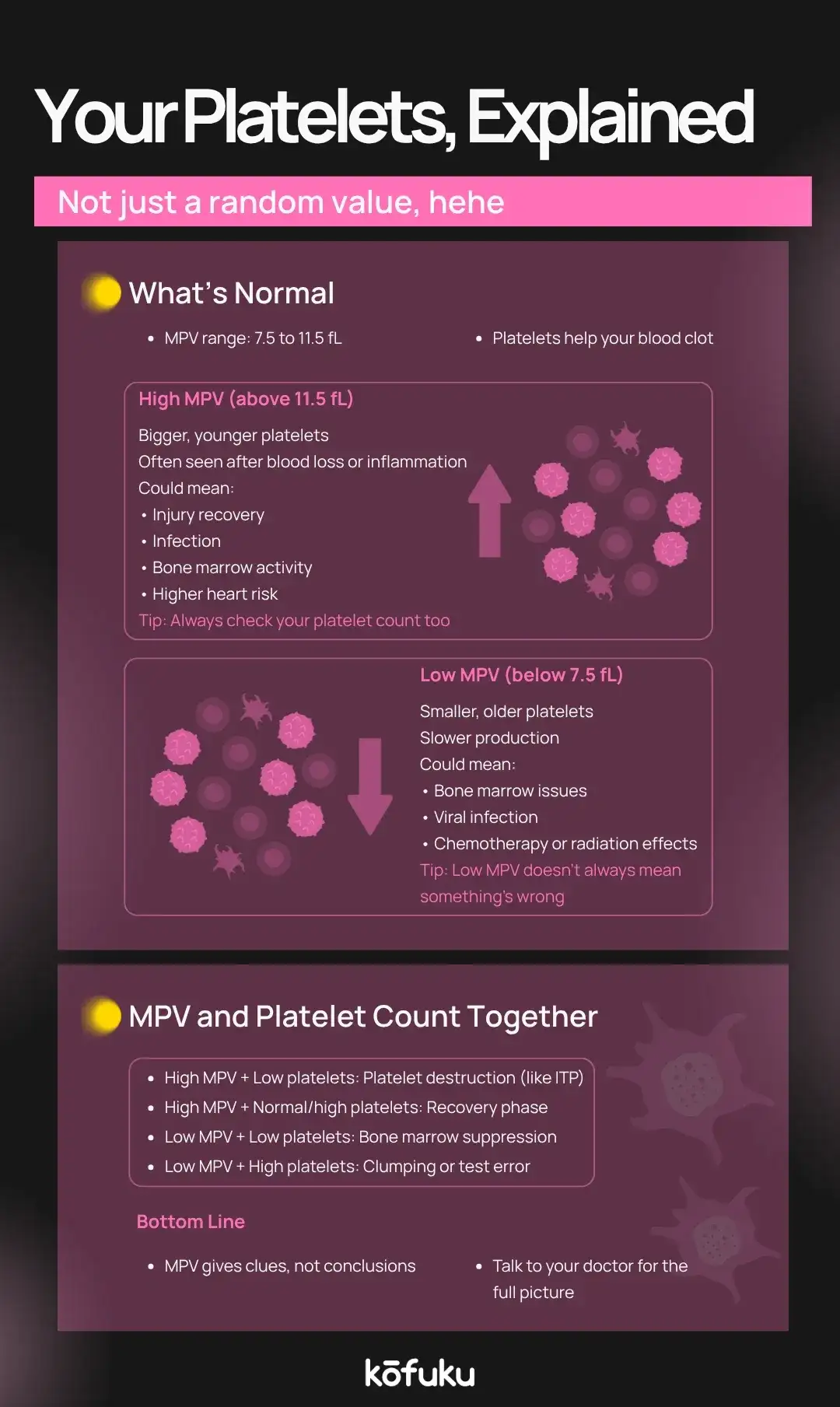
The mean platelet volume (MPV) should be in the range of seven femtolitres to 11.5 femtolitres for non-pregnant women. Elevated MPV indicates an increased number of younger, larger platelets, probably due to the rapid production and release from the bone marrow. Similarly, lower MPV means smaller platelets.
In your MPV blood report, a value within this range suggests a balance rate of platelet production and destruction. It means that your bone marrow is releasing platelets of an appropriate size, and your body is likely maintaining a healthy clotting time. An MPV test, which involves analysing blood, is essential for gaining insights into your health.

What Does Elevated MPV (High Platelet Volume) Mean?
An elevated Mean Platelet Volume (MPV) means that your bone marrow is producing platelets of a larger size than usual. Since younger platelets are typically larger and more reactive, a high platelet volume might suggest increased platelet production in the bone marrow, often in response to destruction or loss.
Causes of high MPV include:
- Recent blood loss or haemorrhage
- Inflammatory conditions
- Cardiovascular disease risk
- Thrombocytopenia
- Certain Cancers
- Bone marrow disorders
- Recovery phase after chemotherapy or surgery
Causes and Health Conditions Associated with Low MPV Values
On the flip side, low MPV values suggest smaller and possibly older platelets circulating in the bloodstream. This can indicate decreased bone marrow activity or chronic disease processes.
Common causes include:
- Aplastic anaemia (underactive bone marrow)
- Chemotherapy or radiation therapy
- Chronic kidney disease
- Viral infections (e.g., hepatitis, HIV)
- Autoimmune conditions
- Sepsis or severe infection
In your lab tests, consistently low MPV might require further diagnostic investigation, especially if accompanied by symptoms like fatigue, easy bruising, or excessive bleeding.
How MPV is Used to Diagnose and Monitor Health Conditions
MPV is not an independent diagnostic strategy since it can be used to give clinical evaluations with other indicators. MPV lab value can assist in modern medicine to:
- Diagnose bleeding disorders: Low MPV might indicate platelet dysfunction.
- Monitor inflammatory diseases: MPV can change with disease activity.
- Evaluate cardiovascular risk: Higher or elevated MPV levels may indicate increased platelet reactivity and thrombotic risk.
- Track bone marrow health: Useful in chemotherapy or haematological conditions.
As an example, an elevated MPV can be regarded as an index of higher cardiovascular risk in patients with coronary artery disease. Similarly, in autoimmune diseases such as lupus, MPV can be low during a flare-up or high during remission.

Factors That Can Affect MPV Levels in Your Blood Report MPV
Several factors can influence your MPV blood test result:
- Recent infection: Can alter platelet turnover and size.
- Medications: Chemotherapy, steroids, or antiplatelet drugs can change MPV.
- Sample handling: If blood samples are not analysed promptly, platelets may swell, leading to falsely high MPV values.
- Underlying conditions: Chronic illnesses, liver disease, or bone marrow disorders may skew results.
This is why you should have a blood test for MPV interpreted by a qualified medical person, taking into account clinical manifestations and other laboratory findings.
When to Consult Your Doctor About Your MPV Lab Test Results
You should consult your doctor about your MPV lab test if:
- Your MPV in the blood report is significantly higher or lower than the reference range.
- The value is abnormal and accompanied by symptoms like unexplained bruising, frequent nosebleeds, or prolonged clotting.
- You have a personal or family history of bleeding or clotting disorders.
- Your healthcare provider suspects an underlying condition affecting platelet production.
Conclusion
A heightened lab result of MPV in the blood in most cases is not a cause for concern, but it can inform some other tests. For instance, a high value of platelet volume with other indicators such as CRP (C-reactive protein) or ESR (erythrocyte sedimentation rate) may indicate an inflammatory or infectious process.
Never self-diagnose just because of a single abnormal value of a blood test in MPV alone. The MPV blood test has to be considered in the context of your whole blood profile, your medical history and your clinical examination.
That’s why it's best to consult your doctor for any health concerns. Prompt diagnosis and treatment are crucial for avoiding complications and a smooth recovery.
FAQ
MPV, or Mean Platelet Volume, measures the average size of your platelets in a blood sample. It helps assess platelet production and activity in your bone marrow. Your blood lab MPV value offers insights into potential clotting disorders, inflammation, or bone marrow conditions requiring medical interpretation.
The typical MPV range in a blood report is 7.5 to 11.5 femto litres (fL). Values within this range suggest balanced platelet production and function. Slight variations may occur between laboratories. Any results outside this range should be evaluated by a medical professional in combination with other blood markers and clinical symptoms.
An elevated MPV can occur due to increased platelet production in response to blood loss, inflammation, or recovery from infections. Conditions such as thrombocytopenia, cardiovascular disease, and bone marrow disorders may also raise MPV levels. High MPV should be reviewed alongside platelet count and other diagnostic markers.
Low MPV indicates smaller platelets, which may suggest reduced bone marrow activity or older circulating platelets. It can be linked to chronic illnesses, chemotherapy, autoimmune conditions, or certain anaemias. Persistent low MPV in lab tests warrants further investigation, especially if accompanied by fatigue, bruising, or abnormal bleeding.
A high platelet volume in your blood lab MPV result typically means your body is producing more large, young platelets, often in response to bleeding, inflammation, or platelet destruction. It may signal increased clotting activity or underlying conditions such as infection, recovery from surgery, or cardiovascular risk factors.
Join our wellness community
Have a question or an experience to share? Join the Wellness Corner discussion on Kofuku Social.
Medical Disclaimer
This article is for information only and is not medical advice. Kofuku content is community-driven and complements, not replaces, professional care. Consult a qualified provider before acting on any health decision.
Related articles

Universal Blood Donor and Recipient: Myths vs. Facts

Tests for Food Allergies: Why Getting the Right Diagnosis Matters