
What is Azithromycin and How Does It Work

Written by Shruti Thapa
Reviewed by Dr. Pankaj Sharma, MD


Key Takeaways

Introduction
In almost all Indian homes, there’s a medicine compartment with nearly all the medicines doctors have ever prescribed. You might have heard your parents keep a small strip of tablets just in case ‘anybody caught a cold or had a sore throat’. The strip is generally of Azithromycin tablets and is one of the most widely prescribed antibiotics in India.
Azithromycin 500 tablets are prescribed for multiple conditions, from throat and ear infections to certain respiratory conditions. But what exactly is Azithromycin, and how does it work?
In simple terms, Azithromycin is an antibiotic that fights bacterial infections, such as respiratory infections, skin infections, ear infections, eye infections, and in some cases, even sexually transmitted diseases (STDs). But there are some precautions to take too. For instance, you should not consume Azithromycin tablets if you have ever had jaundice or liver problems when you consumed this medicine previously.
This blog will help you understand what Azithromycin is, its variants and forms, azithromycin oral suspension IP 200mg, can azithromycin be used for a sore throat, possible side effects, and more.
Azithromycin Variants & Forms
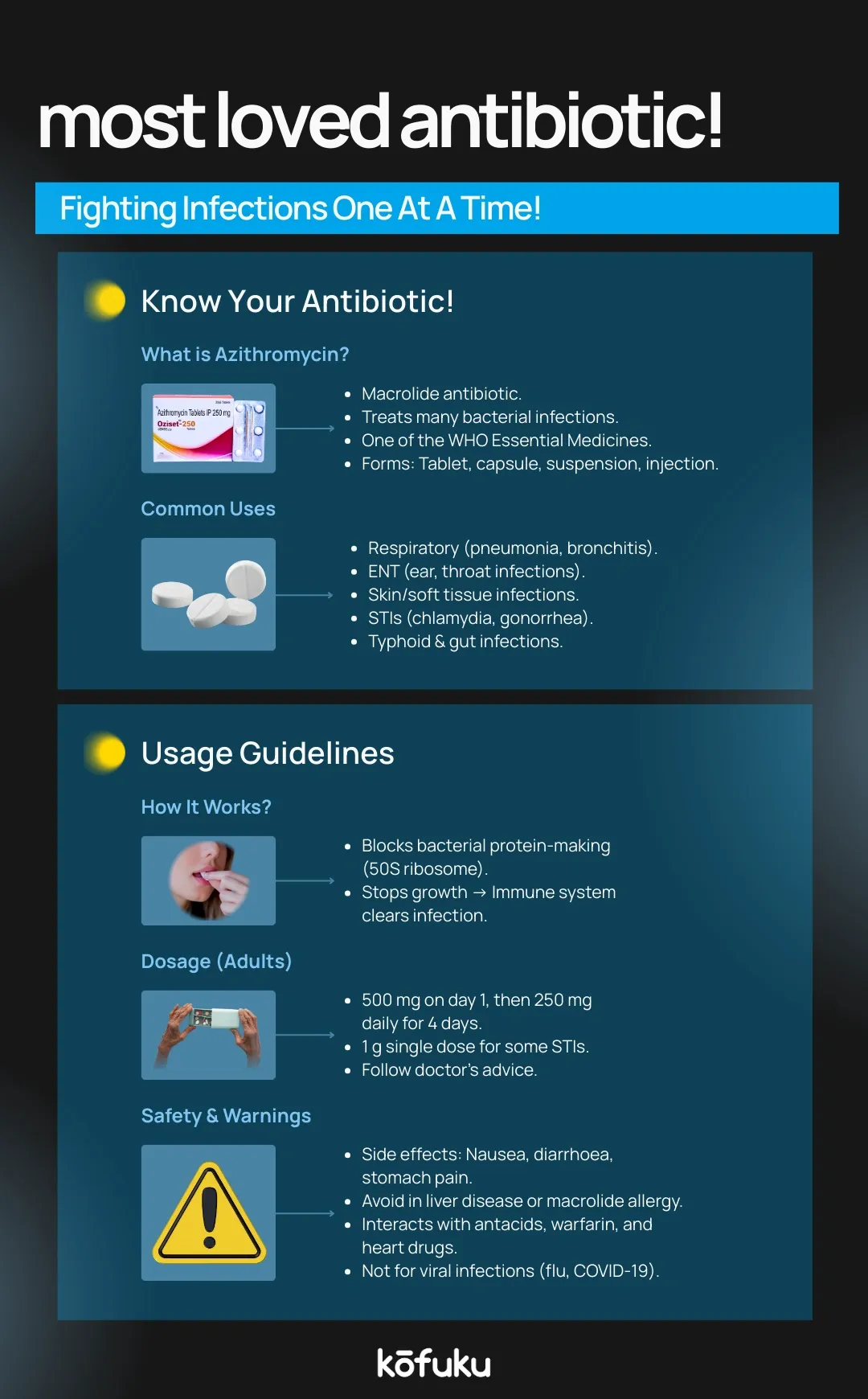
Azithromycin is a macrolide (class of antibiotics) antibiotic used to treat various bacterial infections. It is available in multiple forms to suit different age groups and medical needs, such as:
-
Azithromycin tablets: The tablet azithromycin 500mg and the azithromycin tablet IP250 mg are commonly prescribed strengths of the medicine.
-
Azithromycin oral suspension: A liquid form for children or those who have difficulty swallowing tablets.
-
Azithromycin injection: Used in hospitals for severe infections where oral medicine is not sufficient.
Azithromycin Oral Suspension IP 200mg
Azithromycin oral suspension IP 200mg is often prescribed for children. It also comes as a powder in bottles, which can be mixed with boiled and then cooled water before use. The dosage usually depends on the weight, and is generally given once a day for a set number of days.
Common uses of Azithromycin oral suspension IP 200 mg are:
-
Middle ear infections
-
Strep throat and tonsillitis
-Certain respiratory tract infections
Tablet Azithromycin 500mg
Tablet Azithromycin 500mg is an antibiotic used to treat various types of bacterial infections, typhoid fever, and some sexually transmitted diseases like gonorrhea.
You can take the tablet Azithromycin 500mg with or without food, but make sure you take it regularly and at a fixed time. Make sure you don’t skip any doses and complete the entire treatment even if symptoms get better. If you stop the course, it may cause the infection to return or worsen.
Common side effects seen with Tablet Azithromycin 500mg include diarrhoea, vomiting, nausea, and stomach pain. These are usually temporary and subside once the treatment is complete. Consult your doctor if you find the side effects are worrisome or persistent.

Azithromycin 250mg Tablet
Azithromycin 250 mg tablet is another commonly found strength of Azithromycin medicine. It has the same purpose as that of the tablet Azithromycin 500mg.
However, do not consume the Azithromycin 250 mg tablet if you have a history of hepatic dysfunction or cholestatic jaundice, as the condition can worsen. Be sure to inform your doctor about any history of allergy or heart problems before taking this medicine.
Pregnant or breastfeeding women should also consult their doctor before using this medicine.
Azithromycin Injection
In extreme situations, where one has severe infections of the respiratory system, pelvic inflammatory disease, or hospital-acquired pneumonia, an azithromycin injection can be used. The type is absorbed quickly and is frequently administered along with other antibiotics in hospitals.
Price of Azithromycin
The price of azithromycin medicine varies depending on the form, brand, and strength:
-
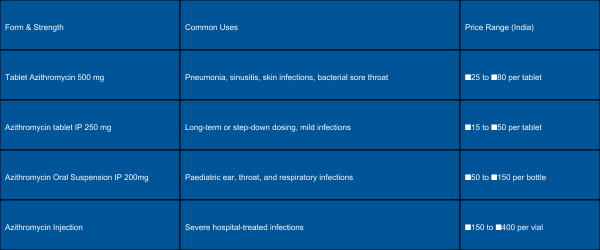
Azithromycin 500 price: ₹25 to ₹80 per tablet, depending on the manufacturer.
-
Azithromycin oral suspension: ₹50 to ₹150 per bottle.
-
Azithromycin injection: ₹150 to ₹400 per vial.
Prices can also differ between generic and branded options. Always choose quality-assured brands recommended by your doctor.
How to Take Azithromycin
Whether in tablet, suspension, or injection form, Azithromycin should be taken exactly as prescribed. For tablets:
-
Take before or after food, if you face any stomach discomfort, take it with food.
-
Take the medicine at the same time each day.
-
Do not skip doses, and complete the full course even if symptoms improve.
Side Effects & Precautions
When consuming Azithromycin in any form, you must be aware of the possible side effects and precautions. It will ensure the drug works effectively and your health does not deteriorate.
Common side effects:
- Nausea or vomiting
- Diarrhoea
- Stomach cramps
- Temporary changes in taste
Precautions:
- Inform the doctor if you have liver or kidney issues.
- Tell your doctor about any other medicines you take to avoid interactions.
- Not all infections require antibiotics; misuse can lead to resistance.

Storage & Handling
- Store tablets and suspensions in a cool and dry place.
- After mixing the azithromycin oral suspension, it must be refrigerated when necessary.
- Do not let it get into the hands of children.
Doctor’s Advice & Prescription Guidelines
In India, azithromycin is a prescribed drug. Self-treatment may be destructive rather than constructive, particularly in the case of viral infection or if you take the wrong dosage. It should be taken under the supervision of health practitioners and never give your prescription to other people.
Summary Table
Here’s a tabular overview of the common uses and price of different forms and strengths of Azithromycin medicine:
If you notice any severe side effects or if your symptoms worsen, consult your doctor immediately. Take the medicine as prescribed, in terms of dose and duration.
FAQ
Azithromycin oral suspension IP 200mg treats bacterial infections in children, such as ear infections, strep throat, sinusitis, and respiratory tract infections. It’s also prescribed for some skin and soft tissue infections. Make sure to follow the paediatrician's recommended dosage, which is generally based on the child’s weight.
The typical course for an azithromycin 500mg tablet lasts three to five days, depending on infection type and severity. Your doctor decides the exact duration. Always complete the full course, even if symptoms improve, to prevent antibiotic resistance.
Azithromycin can effectively treat a bacterial sore throat within a few days, often improving symptoms within 48 hours. However, it’s ineffective for viral sore throats, and therefore, a diagnosis from a doctor is essential before use.
The price of an azithromycin 500mg tablet in India ranges between ₹25 and ₹80, depending on the brand, manufacturer, and location. Prioritise the quality of the medicine to ensure your symptoms go away soon. If you go for generic options, which usually cost less, confirm with your doctor first.
Azithromycin is safe for children if taken as directed by a paediatrician. You should adhere to the precise guidelines and not self-administer to prevent the possibility of side effects or antibiotic resistance.
Yes, you can. However, if it causes stomach discomfort, take it after or with a meal to reduce irritation. If you notice any severe reaction or if the symptoms don’t improve, talk to your doctor.
Common side effects of azithromycin oral suspension include diarrhoea, nausea, vomiting, abdominal cramps, and temporary changes in taste. Rarely, allergic reactions or liver problems may occur. Report persistent or severe side effects to your doctor promptly for evaluation.
Azithromycin often starts reducing bacterial activity within hours, with noticeable symptom improvement in 24 to 48 hours. Complete recovery depends on infection type and severity. Always complete the prescribed course to ensure the infection is treated entirely, which can prevent recurrence.
Azithromycin and amoxicillin are both effective antibiotics, but they work differently. The “better” choice depends on the bacteria causing the infection, patient allergies, and treatment goals. Doctors select based on cause, resistance patterns, and your medical history for the best outcomes.
No, azithromycin cannot treat viral infections such as the cold or flu. It works only against bacterial infections. Taking it for viral illnesses is ineffective and may lead to antibiotic resistance, reducing the effectiveness of anti-bacterial medicine during future bacterial infections.
Join our wellness community
Have a question or an experience to share? Join the Wellness Corner discussion on Kofuku Social.
Medical Disclaimer
This article is for information only and is not medical advice. Kofuku content is community-driven and complements, not replaces, professional care. Consult a qualified provider before acting on any health decision.
Related articles

Universal Blood Donor and Recipient: Myths vs. Facts

Tests for Food Allergies: Why Getting the Right Diagnosis Matters