
Sodium Chloride Injection IP: What It Is and Why Doctors Use It

Written by Rayomand S Engineer
Reviewed by Dr. Ananthakrishnan Chandrasekhar, MD


Key Takeaways
- Introduction
- What Is Sodium Chloride 0.9 (Normal Saline)?
- Key Properties of NS Injection
- Sodium Chloride Injection IP Uses in Medical Practice
- Combination Form: Sodium Chloride and Dextrose Injection
- Dosage and Administration Guidelines for Sodium Chloride Injection
- Possible Normal Saline Side Effects and Risks
- Special Precautions with Sodium Chloride Injection IP
- FAQs

Introduction
When admitted to a hospital in India, many patients will notice an intravenous (IV) fluid bag at the bedside. One of the most commonly used solutions is sodium chloride injection IP 0.9%, often called “normal saline.”
In this article, we will look at what a sodium chloride 0.9% solution is, why it is prescribed, how it differs from other IV fluids, and what patients should know about its possible risks and precautions.
What Is Sodium Chloride 0.9 (Normal Saline)?
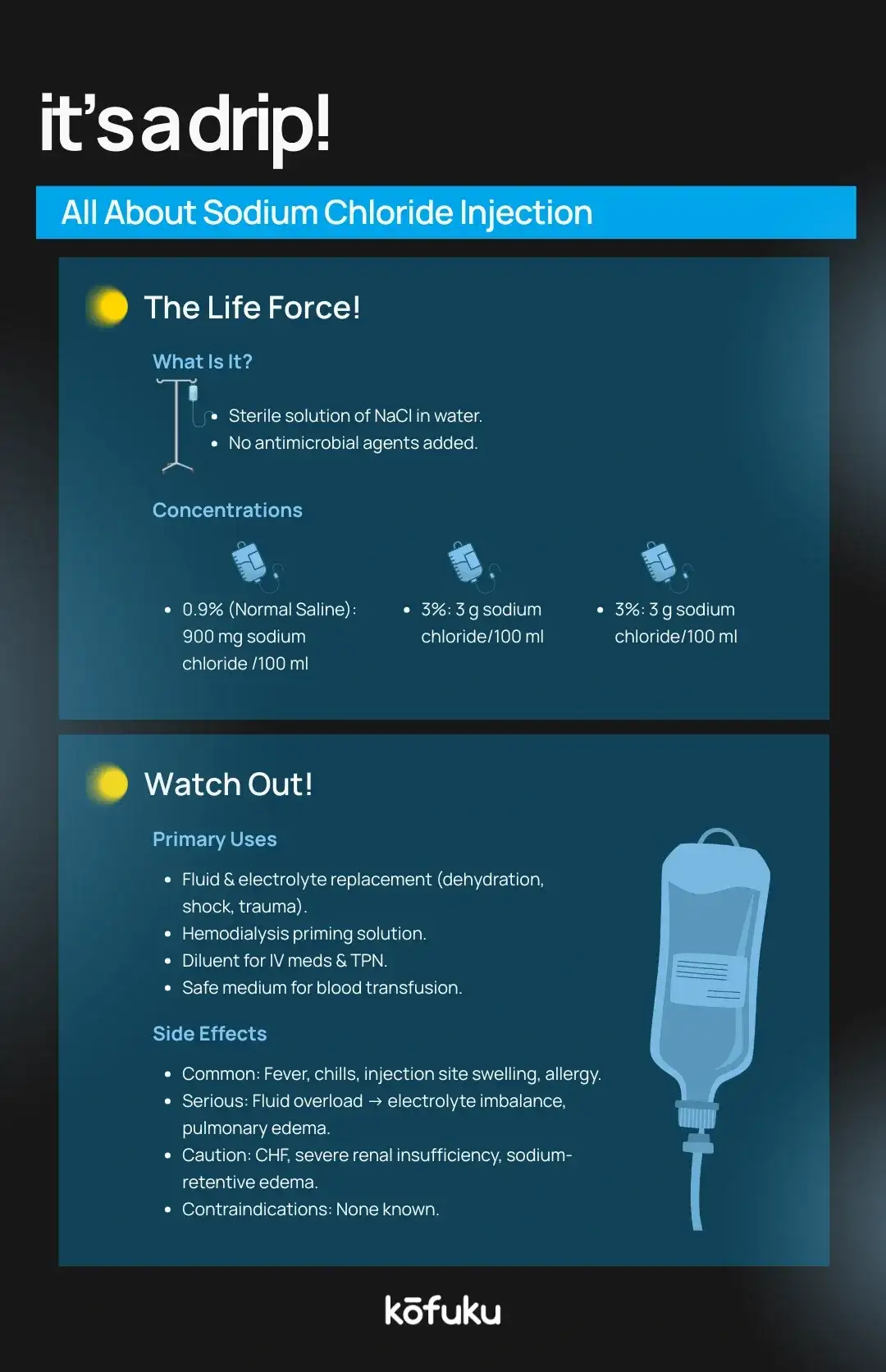
Normal saline, or sodium chloride injection NS, is a sterile, isotonic solution in water containing 0.9 g of sodium chloride in 100 mL. It is filed as “IP” in India, and this means that it meets the criteria of the Indian Pharmacopoeia.
Its salt concentration closely matches that of human plasma, which means it can be infused directly into the veins without disturbing the body’s fluid balance. For this reason, sodium chloride 0.9% injection is considered safe for use in most medical situations.
Key Properties of NS Injection
- Isotonic with body fluids, preventing cell shrinkage or swelling.
- Sterile and free of pyrogens, making it safe for IV use.
- Suitable for both adults and children when dosed correctly.
- Packaged in various volumes, from NS 100 ml bottles to one-litre bags.
Differences Between 0.9% and 3% NaCl Injection
Sodium chloride injection 0.9% is isotonic, but 3% NaCl injection is hypertonic, having three grams of salt per 100 ml. Hypertonic saline is not used to maintain routine hydration, but it is ordered under special circumstances, like the treatment of severe hyponatraemia (low blood sodium).
Sodium Chloride Injection IP Uses in Medical Practice
The most significant sodium chloride injection applications are:
Rehydration and Fluid Replacement Therapy
Sodium chloride infusion helps replace fluids and restore electrolyte balance in patients with diarrhoea, vomiting, heatstroke or after surgery. In India, demand for IV fluids rises in summer due to dehydration.
As a Diluent for IV Medicines
Sodium chloride injection is used as a diluent for IV treatments. Many drugs, such as antibiotics, pain medicines and cardiac medications, are dissolved in normal saline before administration, making it the standard choice for dilution.
Sodium Chloride Infusion in Hospitals
In critical care, sodium chloride infusion is used to maintain hydration and blood pressure, especially after major surgery or injury. It also serves as a carrier for life-saving medications in the ICU.

Combination Form: Sodium Chloride and Dextrose Injection
Hospitals use dextrose saline, a mix of salt and glucose. It hydrates the body while providing quick energy and is often given to post-operative patients, malnourished children or adults recovering from illness.
Dosage and Administration Guidelines for Sodium Chloride Injection
The dose of sodium chloride injection IP is dependent on the patient, age, and body weight. In general, doctors recommend 500 ml and up to 2 litres when prescribed to those over 18 and then modified accordingly when it comes to children.
NTG Dilution and Compatibility (Medical Reference)
One important use is in cardiac care, where nitroglycerin (NTG) is diluted with normal saline to ensure safe and controlled delivery in intensive care units.

Possible Normal Saline Side Effects and Risks
Although generally safe, patients should be aware of normal saline side effects. These include:
-
Fluid overload, especially in patients with kidney or heart disease.
-
Electrolyte imbalance may occur if administered in excessive amounts.
-
Local irritation at the IV site.
-
Rare cases of allergic reactions.
NS 100 ml Uses and Doses in Patients
Smaller volumes such as NS 100 ml bottles are common in out-patient settings. They are often used:
- As a flush for IV cannulas to keep lines open.
- To dilute small doses of injectable drugs.
- For short rehydration needs in children or elderly patients.
Special Precautions with Sodium Chloride Injection IP
Doctors and nurses take several precautions when prescribing sodium chloride injection IP. Uses include:
-
Patients with hypertension, edema or kidney problems require careful monitoring.
-
Infusion rates must be adjusted for elderly patients.
-
Hypertonic saline, such as 3% NaCl injection, must only be given under strict supervision.
-
Solutions must be checked for clarity and expiry before use.
FAQ
The main sodium chloride injection uses include restoring lost body fluids, correcting electrolyte imbalances, serving as a diluent for IV medications, maintaining hydration in patients unable to drink, and acting as a sterile medium for safe drug administration.
In hospitals, sodium chloride injection IP 0.9 is widely used as normal saline for intravenous hydration, drug dilution, flushing IV lines, and restoring electrolyte balance. It remains the most commonly prescribed solution in emergency care, surgery, and intensive treatment.
NS sodium chloride injection refers to “Normal Saline,” a sterile solution containing 0.9% sodium chloride in water. It is isotonic with body fluids, making it safe for intravenous use in hydration, medication delivery, and essential electrolyte replacement therapies.
NS 100ml uses include short-term intravenous hydration, flushing of IV catheters, diluting intravenous medications, and correcting mild dehydration. It is often prescribed in smaller volumes for paediatric patients, routine hospital procedures, and post-surgical care where controlled fluid administration is required.
Normal saline may cause swelling, vein irritation, or, rarely, infection at the injection site. Overuse can raise sodium levels, posing risks for patients with heart, liver, or kidney problems.
Sodium chloride 0.9 is isotonic and used for routine hydration, while 3 NaCl injection is hypertonic, reserved for critical cases like severe hyponatremia or brain swelling. Improper use of 3% saline can cause complications, requiring strict hospital monitoring.
Sodium chloride infusion is administered when patients suffer from dehydration, fluid loss, or electrolyte imbalance. It is also used to maintain blood volume during surgery, assist medication delivery, and treat patients unable to consume fluids orally due to illness.
Sodium chloride dextrose injection provides both fluids and energy, useful in recovery after surgery, prolonged fasting, or when energy intake is limited.
Join our wellness community
Have a question or an experience to share? Join the Wellness Corner discussion on Kofuku Social.
Medical Disclaimer
This article is for information only and is not medical advice. Kofuku content is community-driven and complements, not replaces, professional care. Consult a qualified provider before acting on any health decision.
Related articles

Universal Blood Donor and Recipient: Myths vs. Facts

Tests for Food Allergies: Why Getting the Right Diagnosis Matters