
Tests for Food Allergies: Why Getting the Right Diagnosis Matters

Written by Shubhechhya Mukherjee
Reviewed by Dr. Ananthakrishnan Chandrasekhar, MD


Key Takeaways
- Introduction
- What Are Food Allergies?
- Food Allergy vs. Food Sensitivity vs. Food Intolerance
- Types of Food Allergy Tests Available
- How to Prepare for a Food Allergy Test
- Costs of Food Allergy Tests
- Risks and Limitations of Allergy Testing
- When to Get Tested: Symptoms That Should Not Be Ignored
- Final Thoughts on Food Allergy and Sensitivity Testing
- FAQs

Introduction
Have you ever experienced discomfort after consuming some foods, such as itchiness, stomach pain, or difficulty in breathing, and wondered whether it was an allergy or a mere sensitivity? In India, there’s little awareness of the distinction between true food allergies and food intolerances.
It is one reason why testing for food allergies is very important in providing a person with clarity to determine the right form of treatment. A misunderstanding of such symptoms can result in unnecessarily limiting food intake, dynamic tension, or, worse, developing life-threatening health conditions if a real allergy is disregarded.
This article discusses the distinction between allergies, sensitivities, and intolerances to foods, some of the available food allergy tests, the cost, risks involved, and the need to see an expert, a food allergy doctor.
What Are Food Allergies?
Food allergy can be defined as a reaction of the immune system that is caused by the ingestion of certain foods. The immune system mistakenly identifies harmless proteins in food as threats and releases chemicals like histamine, which cause allergic reactions.
The category of common food allergens is milk, eggs, peanuts, tree nuts, soy, wheat, fish, and shellfish. Symptoms may be mild (itching or rashes) or more severe (anaphylaxis, which requires immediate medical attention).
Food allergies manifest themselves every time after intake, no matter how minute the portion may be. This is why conducting tests for food allergies is crucial.
Food Allergy vs. Food Sensitivity vs. Food Intolerance
These three conditions are confusing, but it is crucial to learn to identify the conditions correctly, since the correct identification of the condition determines the treatment.
-
Food Allergy: An immune response that can be life-threatening. For example, peanut allergies often trigger immediate symptoms such as swelling, hives, or breathing difficulty.
-
Food Sensitivity: Unlike allergies, sensitivities do not involve the immune system directly but can cause delayed reactions like headaches, bloating, or fatigue. Many people seek a food sensitivity test to identify trigger foods.
-
Food Intolerance: This occurs when the body struggles to digest certain foods, such as lactose intolerance due to low lactase enzyme levels. Intolerance is uncomfortable but not life-threatening.
Knowing how to check food intolerance, allergy, or sensitivity can help you get medical advice right, rather than abstaining from whole food groups when you don't have to.

Types of Food Allergy Tests Available
Medical professionals employ numerous diagnostic tools and tests for food allergies. Selecting the appropriate food allergy test panel will provide optimum results given your symptoms and medical history.
-
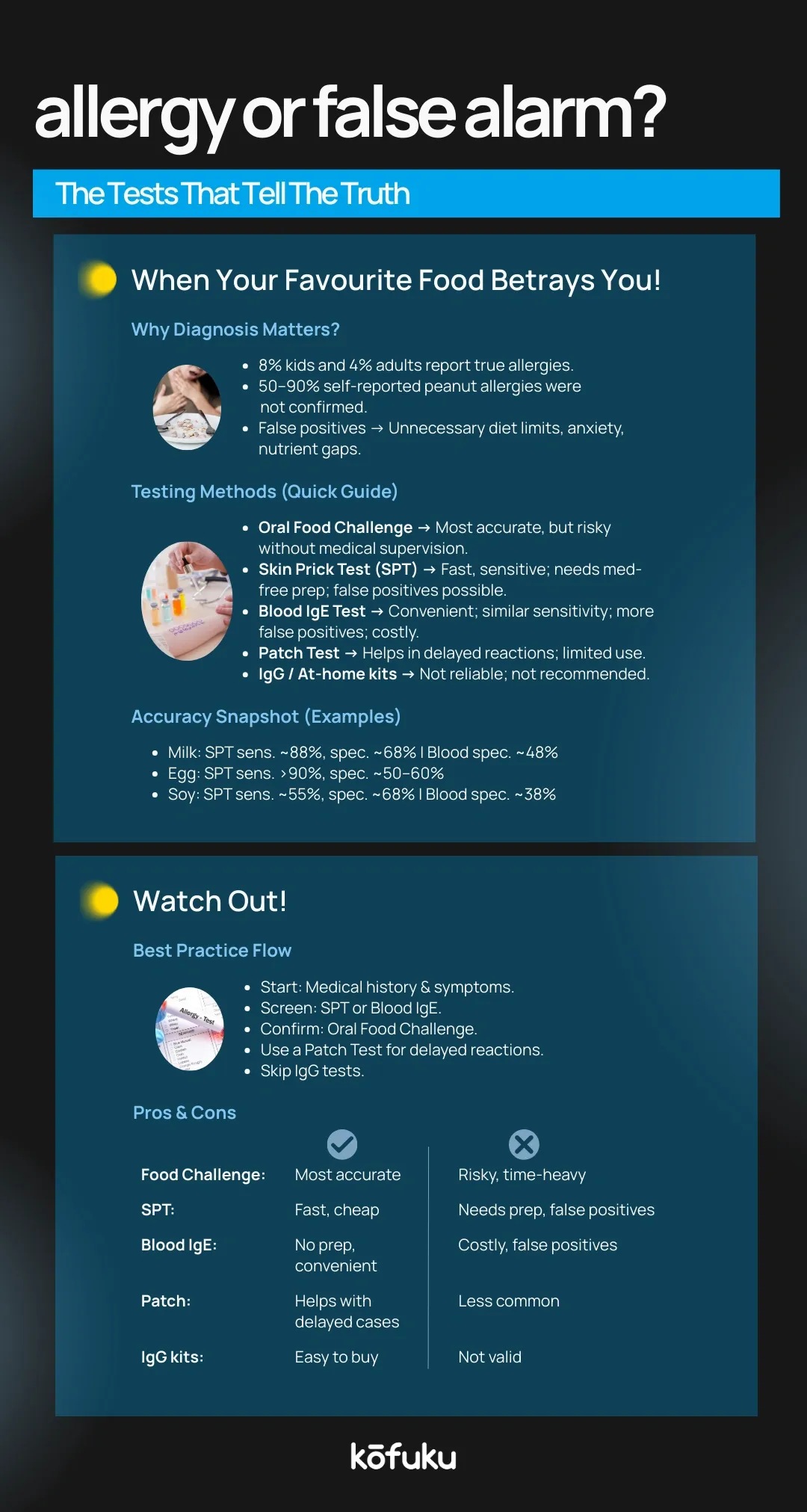
Skin Prick Test: An allergen extract is applied to the skin using a prick. In case of redness or swelling, this might point to an allergy.
-
Blood Test: It measures the blood antibodies to the allergen. A food allergy panel test typically involves testing common allergens in combination.
-
Elimination Test: Patients exclude possible foods in their diet and introduce them slowly and under constraint. It is useful but can be used only in conjunction with close monitoring, and not instead of clinical testing.
-
Oral Food Challenge: The suspected allergen is administered in increasing doses to patients under the supervision of a medical practitioner to establish the reactions.
-
IgG Food Sensitivity Testing: This option is controversial as it tests the Immunoglobulin G (IgG) antibodies, which can be elevated even as a normal immune response to food.
How to Prepare for a Food Allergy Test
Preparation can impact accuracy. Before undergoing tests, patients may be asked to:
-
Avoid antihistamines or allergy medications, as they may interfere with results.
-
Maintain a food diary to track symptoms and potential triggers.
-
Discuss recent illnesses, as infections can affect immune responses.
Your food allergy doctor will be specific in their advice to you. No medicine that has been prescribed should be discontinued without consulting a physician.
Costs of Food Allergy Tests
The cost of testing varies depending on the method and location.
-
Skin Prick Tests: Usually between ₹1,000 and ₹3,000.
-
Blood Tests (IgE or allergy panel): ₹2,000 to ₹8,000 depending on the food allergy testing panel selected.
-
IgG Food Sensitivity Testing Cost: ₹4,000 to ₹12,000, as it involves a broader range of foods and specialised labs.
Insurance coverage may not be available fully for these tests, and consequently, you may have to pay out-of-pocket.
Risks and Limitations of Allergy Testing
While generally safe, allergy tests have some limitations and risks, such as:
-
False Positives: Skin and blood tests may suggest an allergy when none exists.
-
False Negatives: Rarely, a test might miss a true allergy.
-
Mild Reactions: Skin prick tests can cause temporary itching or redness.
-
Oral Challenges: May cause severe reactions and should only be done under expert supervision.
When to Get Tested: Symptoms That Should Not Be Ignored
Food allergy symptoms vary, but should never be dismissed. Get tested if you notice:
-
Swelling of the lips, tongue, or throat after eating.
-
Unexplained rashes or hives.
-
Stomach cramps, diarrhoea, or vomiting linked to meals.
-
Breathing difficulties or wheezing.
-
Delayed fatigue, headaches, or bloating suggest food sensitivity.
Early detection will help avert life-threatening reactions and unnecessary food restrictions.
Managing Food Allergies After Diagnosis
Once diagnosed, management becomes a lifelong process. Steps include:
-
Strict Avoidance: Eliminating the allergen entirely.
-
Emergency Action Plan: Carrying antihistamines or epinephrine injections if prescribed.
-
Regular Check-ups: Monitoring with your food allergy doctor to update management plans.
-
Dietary Guidance: Nutritionists can help maintain a balanced diet while avoiding allergens.
Finding a Food Allergy Doctor Near You
If you suspect an allergic reaction, consulting a food allergist doctor is crucial. Experts are taught to:
-
Differentiate between allergy, sensitivity, and intolerance.
-
Interpret test results accurately.
-
Develop personalised treatment plans, including avoidance strategies and emergency action plans.
In India, allergists tend to be located in larger hospitals or specialty clinics, although most general physicians will be able to provide referral follow-up.
Final Thoughts on Food Allergy and Sensitivity Testing
When reactions to food are not well understood, it can create misunderstandings and fear. Some may categorise minor symptoms as intolerance, whereas others may over-limit their diets when it is not necessary. The only way to get clear answers is a proper diagnosis through reliable tests of food allergies.
If you cannot tell whether you have an allergy, sensitivity reaction, or intolerance to a particular food, seek the advice of a qualified food allergy doctor and consider proper testing. Not only is early action the best guarantee of safety, but it is also of a better quality of life, enabling you to eat without fear.
FAQ
The best tests for food allergies include skin prick testing, specific blood tests, and oral food challenges under medical supervision. Choice depends on symptoms, suspected allergens, and a doctor’s recommendation.
Food sensitivity tests, particularly IgG-based ones, remain controversial. They may indicate delayed reactions but often lack clinical reliability. Results should always be interpreted with medical guidance, alongside detailed symptom and diet evaluation.
You can track symptoms with a food diary and attempt an elimination diet, removing and reintroducing suspected foods. However, professional consultation ensures accuracy and prevents unnecessary dietary restrictions.
A food allergy panel test usually screens for common allergens such as peanuts, milk, eggs, soy, wheat, fish, and shellfish. Some panels expand to regional and lifestyle-specific foods.
Food allergy tests are available at hospitals, diagnostic centres, and specialised allergy clinics. Searching “food allergies test near me” online can help identify nearby options and compare prices.
You should consult a certified allergist or immunologist, as they specialise in diagnosing and treating food allergies. General practitioners may provide referrals, but cannot always manage complex cases.
A food allergist doctor specialises in allergy diagnosis and treatment, using advanced tests and management plans. A general doctor can recognise symptoms but may refer patients for specialist evaluation.
IgG food sensitivity testing costs typically range from ₹4,000 to ₹12,000 in India, depending on the number of foods tested, laboratory facilities, and whether the test is part of a panel.
Neither is universally better. Blood tests are safer for severe cases and broader screening, while skin prick tests are faster and cheaper. Doctors often combine both for an accurate diagnosis.
You should get tested if you experience swelling, hives, stomach cramps, diarrhoea, vomiting, wheezing, or fatigue after eating certain foods. Severe symptoms like breathing difficulty require immediate evaluation.
Join our wellness community
Have a question or an experience to share? Join the Wellness Corner discussion on Kofuku Social.
Medical Disclaimer
This article is for information only and is not medical advice. Kofuku content is community-driven and complements, not replaces, professional care. Consult a qualified provider before acting on any health decision.
Related articles

Universal Blood Donor and Recipient: Myths vs. Facts

How Healthy Is Detox Water? Understanding Its Benefits and Popular Myths