
Different Types of Birth Control Methods for Women: A Complete Guide

Written by Shubhechhya Mukherjee
Reviewed by Dr. Thongram Biju Singh, MD


Key Takeaways

Introduction
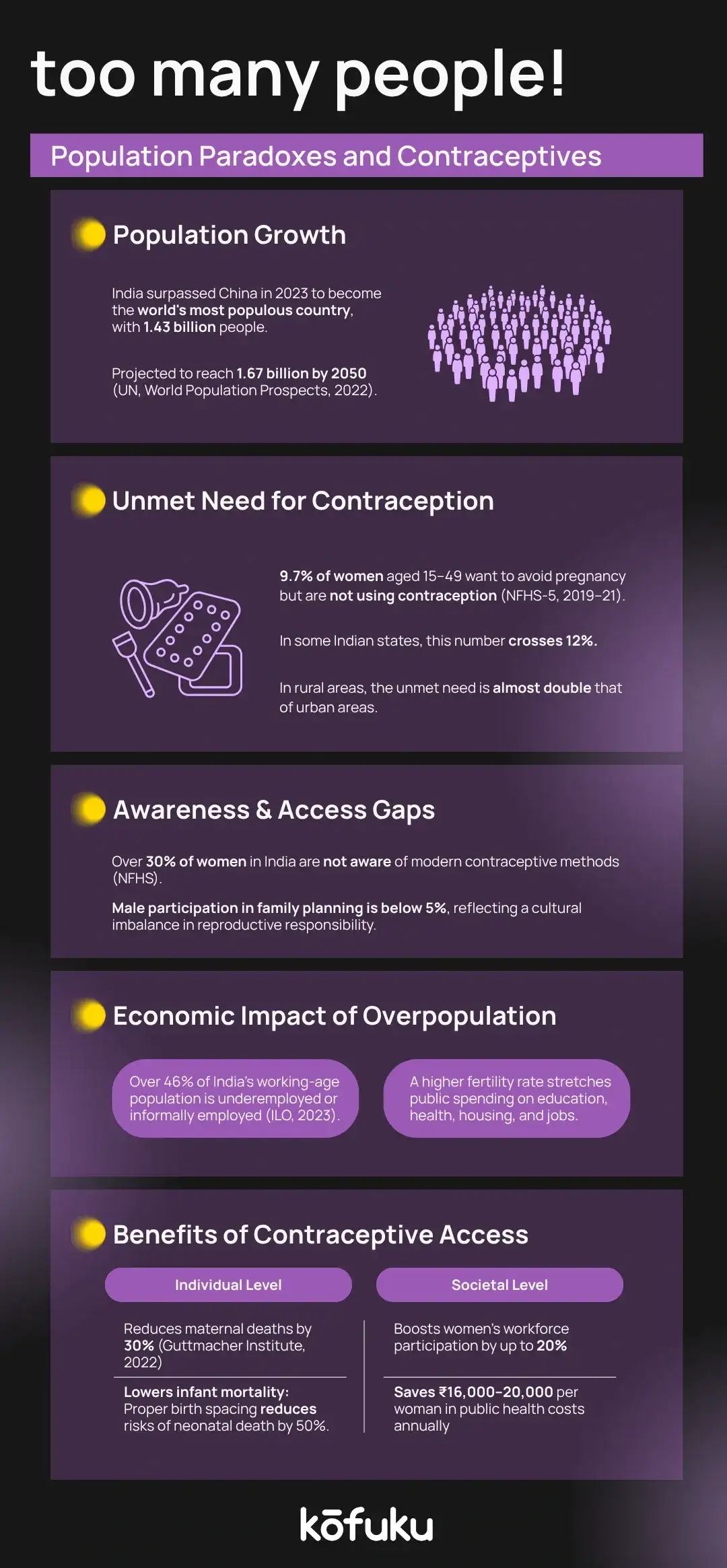
India is one of the most populous countries in the world. However, our country’s total fertility rate (TFR) has fallen to 2.0, which is significantly below the crucial replacement level of 2.1. But what does that exactly mean?
It means that, on average, women are having fewer children than needed to maintain the population size from one generation to the next, which is a red flag when it comes to population growth, fertility, and management.
While headlines pin their focus on population numbers, there is a different reality that is unfolding in the Indian landscape. Our country is headed towards a future with a shrinking workforce and population decline in the next few decades, so the question is, “Why is the conversation around birth control more important than ever in this situation?”
In this blog, we will examine the unique challenges we face in India in terms of population and how family planning is not just about curbing our population, but about making it stronger. This is the key to India's future health, prosperity, and sustainability.
Understanding India's Great Population Paradox
With a TFR of 2.0, people are having fewer children on average than needed to maintain the population size from one generation to the next. This seemingly insignificant figure carries a lot of weight because it indicates that the decline of our future population is most certain.
According to projections, India's population is expected to peak in the next 40-50 years, and then decline nonstop, raising significant concerns about the country's future.
A higher dependency ratio could mean that the number of young people in India to care for the country's ageing population will be comparatively less. This imbalance would strain the economic growth of industries such as healthcare, social security, and many others.
It is a problem that many developed countries like Japan are already facing. The importance of individual family planning decisions on a national level is highlighted by the current state of our country today.
The Power of Choice: How Family Planning Sustains a Nation
Birth control is necessary for resource management and empowerment, and is not just about reducing the population.
It ensures that each child is a planned one, and is born into a family that is capable of raising them and taking care of them emotionally, mentally, and financially. By redefining family planning, the emphasis is shifted from numbers to the welfare of individuals and, subsequently, the country.
Properly spaced and planned pregnancies lower maternal and infant mortality rates and result in much better health outcomes for both mothers and children. By doing this, the nation's foundation is strengthened and the next generation is guaranteed to be healthier and more resilient.
Planning a family also allows women to pursue their desired careers and education, which raises household incomes and makes a substantial contribution to the national economy. This economic empowerment is crucial to maintaining the momentum.
Smaller, planned families allow resources to be focused on improving each child's healthcare, education, and nutrition, resulting in a future workforce that is more competent and effective.
A Comprehensive Guide to Your "Choices of Birth Control"
Understanding the different types of birth control available in the market can be overwhelming. Still, this section will help you understand it better and break down the various birth control options:
1. Barrier Method
In essence, the sperm is prevented from entering the vagina by a barrier created by condoms, cervical caps and diaphragms, etc. They are also the only method that protects against STDs.
2. Hormonal techniques:
This method of birth control employs tiny amounts of hormones (such as pills, patches, and injections) to either stop the release of the egg or to form a barrier for sperm.
Some benefits of hormonal methods include high effectiveness and lighter, more regular periods, but they can also have potential side effects like mood swings, weight fluctuations, or headaches.
3. IUDs
They are tiny devices that are placed within the womb to create an inflammatory response that is poisonous to sperm, to keep them from getting to the egg.
4. Permanent Methods
People who have decided that they no longer want to have children in the future can opt for surgical treatments such as a vasectomy or a tubectomy.
Emphasising a woman's autonomy in choosing a birth control method of her choice, in consultation with her partner and doctor, is essential. This ensures that the chosen method aligns with their health, lifestyle, and family planning goals.
Understanding Effectiveness to Make the Best Choice
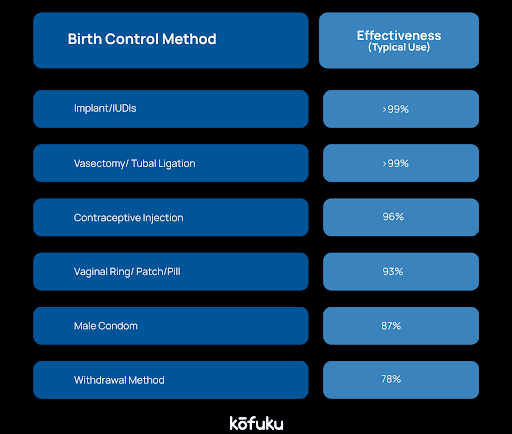
Understanding the difference between "perfect use" and "typical use" effectiveness rates is an important aspect when you’re evaluating birth control methods based on their efficacy.
The term "perfect use" describes how effective a method is when applied consistently and correctly, whereas “typical use” considers human error, missed dosages, or improper application to determine the effectiveness of a method in practical situations. Understanding this distinction is necessary before you commit to a birth control method.
Here is a simple chart that outlines the effectiveness of various birth control methods:
Conclusion
It is clearer than ever that the productivity, health, and education of the people in our country, rather than the country's sheer size, will influence its future power.
Using the birth control method that works best for you for family planning is a strong act of personal and societal responsibility. It helps create a more sustainable future with a healthier society and an empowered workforce.
To fully understand their options, women need to speak candidly with their partners and doctors. Making wise decisions will not only help you plan a family but also contribute to creating a more prosperous and sustainable environment for future generations.

FAQ
Seven important birth control methods are:
- Hormonal methods: such as patches, birth control pills, etc, that release hormones and help to get rid of ovulation.
- Barrier methods: include condoms, cervical caps, etc that effectively block sperm from fertilising eggs.
- IUDs (Intrauterine Devices): include small devices that are inserted into the uterus to prevent pregnancy.
- Sterlisation: involves methods like tubectomy and vasectomy
- Natural Family Planning (NFP): includes methods like tracking ovulation for avoiding pregnancy
- Emergency contraception: involves pills or IUDs that are used post-unprotected sex for avoiding pregnancy.
- Implant methodology: involving integrating small rods under the skin for releasing hormones and getting rid of pregnancy.
- Medical methods: such as IUDs, hormonal pills and certain implants.
- Barrier methods: involving the use of condoms, cervical caps and diaphragms.
- Surgical methods: including sterilisation methodologies such as tubectomy and vasectomy.
- Some natural methods: including withdrawal methods, or NFP.
When it comes to 100% birth control methodology, it is abstinence from engaging in sexual intercourse. Moreover, for people who are sexually active in life, some of the essential methods include long-acting reversible contraceptives (LARCs) such as IUDs and implants, etc having a failure rate around 1%.
- IUDs: including hormonal or copper IUDs, have a failure rate of less than 1%.
- Implants: including the hormonal implants, having a failure rate of less than 1%
- Certain injections: including hormonal injections that have a failure rate of about 4 to 6%.
- Patches: Involving hormonal patches, having a failure rate of 7 to 9%.
- Certain pills: that have a failure rate of around 7 to 10%.
Well, 100% effective birth control measure is abstinence. But, if someone is sexually active, there are methodologies like IUDs and LARCs, and implants that are efficient methods and have a failure rate of less than 1%.
No, condoms are not fully effective and have a failure rate of 13 to 14%. If used regularly and adequately, condoms are 98% effective in avoiding pregnancy and decreasing the risk of STIs.
Join our wellness community
Have a question or an experience to share? Join the She Reads discussion on Kofuku Social.
Medical Disclaimer
This article is for information only and is not medical advice. Kofuku content is community-driven and complements, not replaces, professional care. Consult a qualified provider before acting on any health decision.