
Normal Newborn Temperature: Why Accurate Measurement Matters for Infant Health

Written by Shruti Thapa


Key Takeaways

Introduction
One of the main factors in ensuring a newborn's overall health is maintaining a favourable body temperature. In India, where outdoor temperatures vary significantly, parents are often concerned about whether their baby’s temperature is cooler or warmer than the normal temperature.
Ensuring that the temperature is within the normal temp range for newborns is crucial since slight abnormalities can indicate a possible health condition like infections or hypothermia. This blog will help you understand the normal newborn temperature in the armpit, different types of temperatures, thermometers, and more.
What Is the Normal Temperature Range for a Newborn?
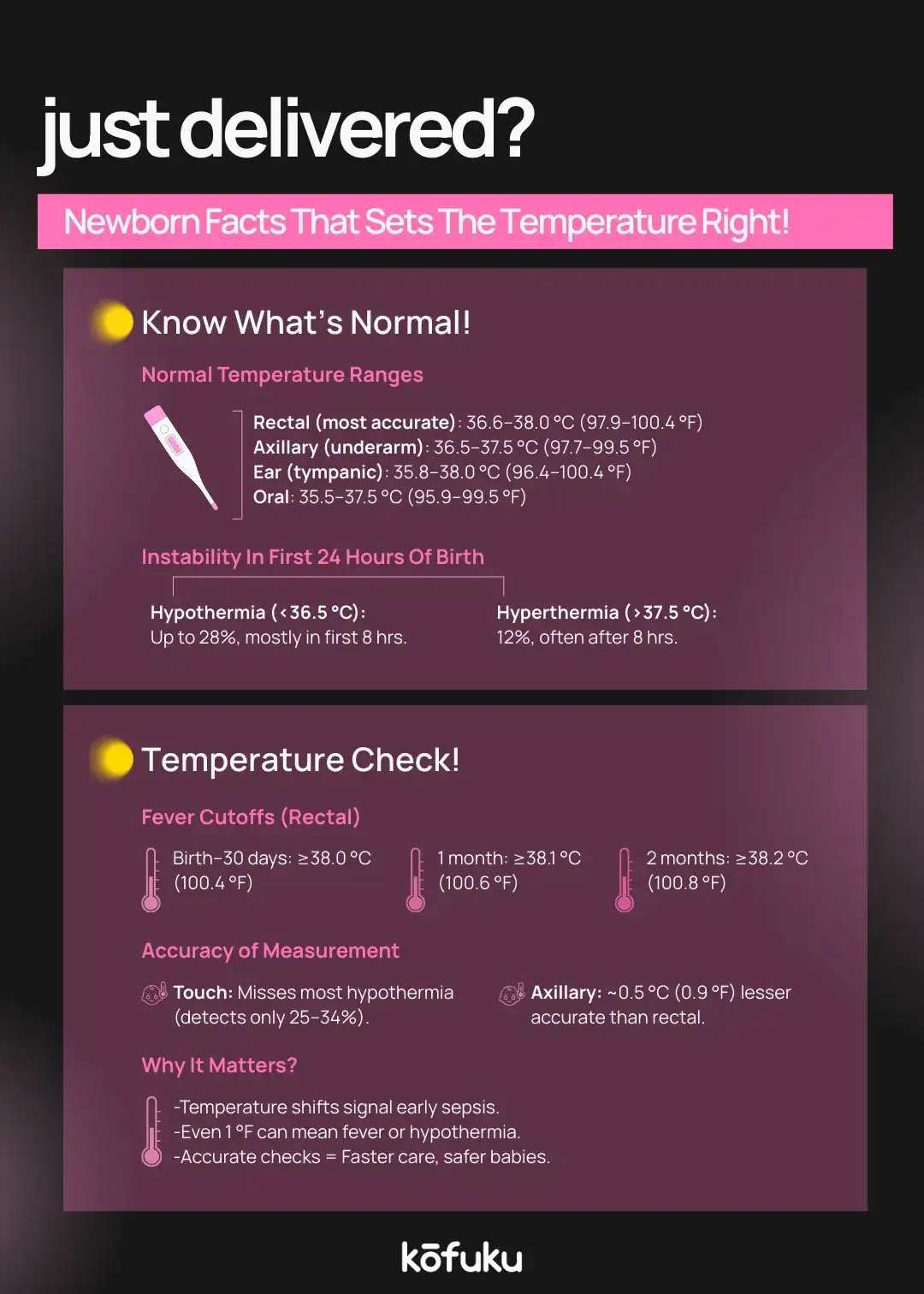
The body of newborns cannot control heat as effectively as that of adults, and monitoring it is crucial. The normal temperature range of a newborn is between 36.5 °C and 37.5 °C (97.7 °F to 99.5 °F).
Normal Newborn Temperature (Armpit/Axillary)
The axillary temperature, taken from under the baby's arm, is the most commonly used method due to its ease and safety. Normal axillary temperature in newborns is between 36.5 °C and 37.2 °C in the majority of the infants.
A digital axillary thermometer for babies should be used to make quick readings and positioned correctly under the armpit to obtain an accurate result.
Rectal Temperature for Infants
The rectal is the most accurate temperature reading. It is highly applicable in a clinical environment for verifying fever. The standard rectal temperature of a newborn is between 36.60-38.0°C.
It is exact, but may be uncomfortable or even painful without conscientious technique and sanitation.
Tympanic Temperature
In a tympanic thermometer, the eardrum is sensed. It is quick and handy, especially with squirmy babies. The tympanic temp in a healthy newborn oftentimes coincides with the rectal temperature in proper positioning; however, it can be inaccurate due to poor positioning.
Forehead and Digital Thermometers
Forehead or infrared digital thermometers for infants are non-invasive and provide instant readings. While convenient, they may underestimate or overestimate the normal newborn temperature armpit, so they are best used for quick checks rather than precise monitoring.
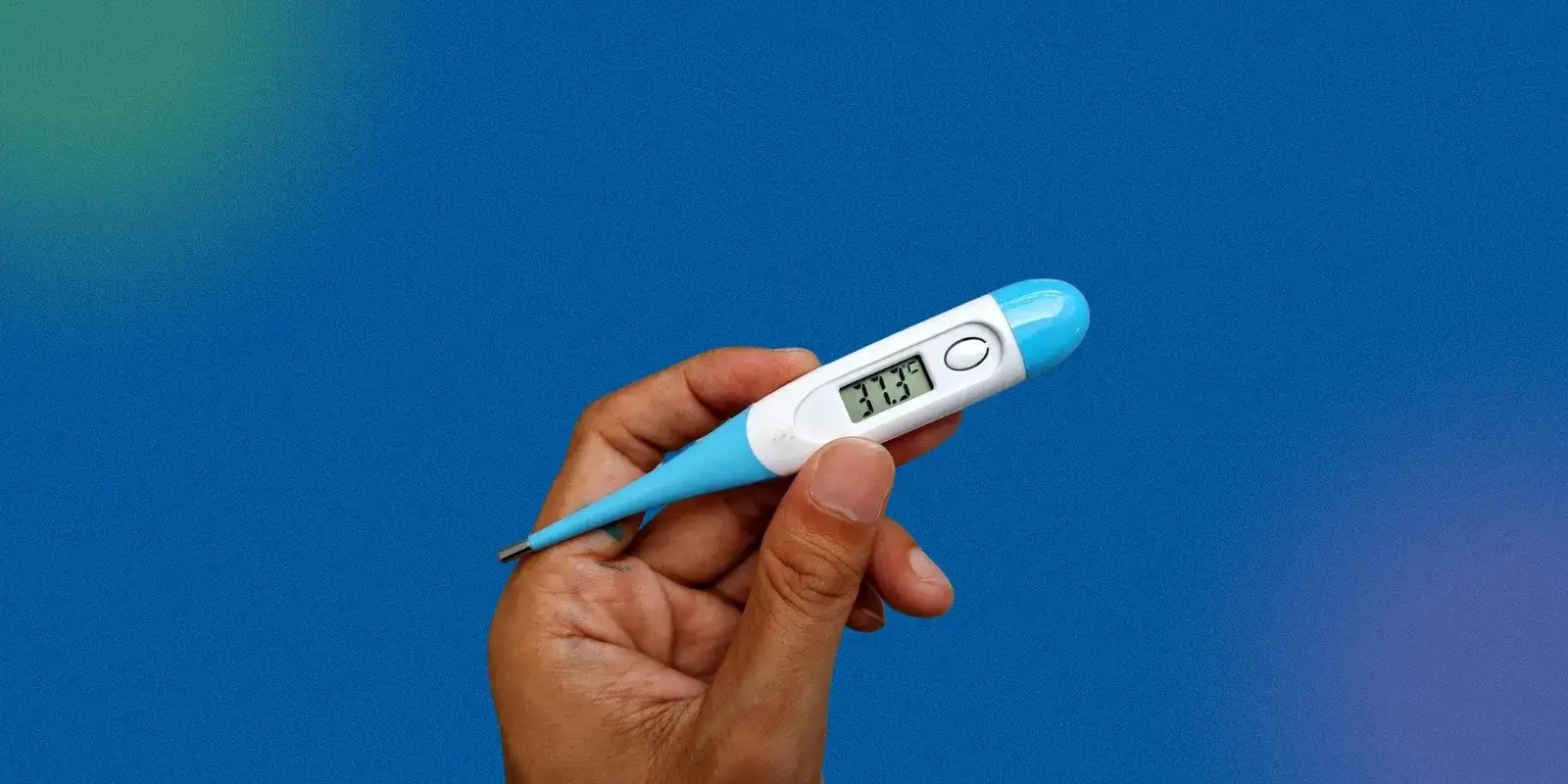
Four Types of Thermometers Used for Infants
There are four primary types of thermometers commonly used for newborns:
- Digital Thermometers are versatile and can be used rectally, orally, or underarm.
- Rectal Thermometers: Preferred and standard option for accuracy in neonates.
- Tympanic (Ear) Thermometers: Quick readings, suitable for active infants.
- Forehead/Infrared Thermometers: Non-invasive, convenient for home use.
Infant Thermometer Options Explained
The selection of a suitable infant's thermometer should be made based on instructional needs, the age of the infant, and the cooperation of the child when using the thermometer. A decent baby thermometer that comes with at least an axillary temperature infant reading is adequate to use at home as well. Confirmation of clinical assessment may necessitate the use of a rectal thermometer or a tympanic thermometer.
How to Safely Check Your Baby’s Temperature
Correct technique ensures accurate readings.
Using an Axillary Thermometer
- Place the digital thermometer under the infant’s arm.
- Ensure the arm is snugly against the body.
- Wait for the device to beep, then record the reading.
This method is safe and non-invasive, making it ideal for routine checks.
Using a Rectal Thermometer for Accuracy
- Clean the rectal thermometer with an antiseptic before use.
- Apply a small amount of lubricant to the tip.
- Gently insert it about 1-1.5 cm into the rectum.
- Hold the infant still until the reading is displayed.
Rectal measurement remains the most accurate, especially if the baby appears unwell.
Using a Tympanic (Ear) Thermometer
- Position the thermometer correctly in the ear canal.
- Pull the ear gently backwards to straighten the canal.
- Press the button to measure.
Correct placement ensures an accurate tympanic temp, avoiding false readings.
When Is a Fever in Infants Considered Serious?
A temperature of over 38 °C (100.4°F) ought to prompt medical attention in a newborn. Fever is an indicator of infections or other underlying diseases in infants. If, with the temperature reading on the thermometer, fever is suspected, parents must contact their paediatrician immediately.

Choosing the Right Baby Thermometer for Your Child
Selecting the right device is crucial. Consider:
- Digital Thermometer: Reliable for axillary temperature newborn checks.
- Rectal Thermometer: Essential for accurate clinical readings.
- Tympanic Thermometer: Quick and convenient, especially for sleep-deprived parents.
- Infrared/Forehead Thermometer: Safe for frequent home monitoring.
Continuous checks are done using a simple baby thermometer in India, because of its accuracy and ease of use. Always refer to the instructions of the manufacturer and ensure everything is clean to provide a safe and accurate reading.
FAQ
The normal newborn temperature armpit usually ranges from 36.5°C to 37.2°C. Measuring with a digital axillary thermometer provides a safe, non-invasive way to monitor your baby’s health and detect early signs of fever or hypothermia.
The normal temp range for newborn infants is typically 36.5°C to 37.5°C. Rectal readings are slightly higher, while axillary temperature of the newborn is slightly lower. Accurate monitoring helps parents identify fever, infection, or low body temperature promptly.
A rectal thermometer is considered the most accurate for newborns, followed by tympanic thermometer readings. Digital infant thermometers measuring axillary temperature are convenient for home use, but rectal measurement remains the gold standard in clinical assessments.
Yes, an axillary thermometer for an infant provides reasonably accurate readings of normal newborn temperature armpit, especially for home monitoring. However, rectal thermometers are more precise for detecting fever or hypothermia in neonates.
A rectal thermometer gives precise normal newborn temperature range readings and is considered the clinical standard. An axillary thermometer for newborns is safer and non-invasive but may slightly underestimate the temperature compared to rectal measurements.
Yes, a tympanic thermometer is safe for newborns and provides quick tympanic temperature readings. Correct placement in the ear canal is essential to ensure accuracy, especially in small infants under six months.
A normal newborn temperature range chart shows axillary temperature in newborns in the range of 36.5°C–37.2°C, 36.6°C–38°C in rectal, and slightly higher in tympanic. Tracking these values helps detect deviations, fever, or hypothermia for timely medical attention.
Use a baby thermometer to measure temperature safely. For home checks, place a digital axillary thermometer under the infant's arm. Rectal thermometers or tympanic thermometer readings offer more accurate results if fever is suspected.
Join our wellness community
Have a question or an experience to share? Join the Parenting discussion on Kofuku Social.
Medical Disclaimer
This article is for information only and is not medical advice. Kofuku content is community-driven and complements, not replaces, professional care. Consult a qualified provider before acting on any health decision.
Related articles

Postpartum Depression During a Pandemic: Recognising Symptoms and Seeking Treatment

Diaper Rash in Newborns and Infants: Causes and Symptoms Explained